Hazel’s End & A Lack of Real World Rabbits
Thursday 19th November 2026
Although I’ve still not fully recovered from the flu, the spare time I’ve had has made me think more about why that lack of rabbits has caused me so much upset.
To me, it links to that final scene from the film. In it, El-Ahrairah comes to take Hazel from this world. After Hazel accepts, the pair pass downhill, through a small area of woodland before taking to the skies and returning uphill and crossing the solitary, naked, stylised tree that symbolises ‘home’, Watership Down.
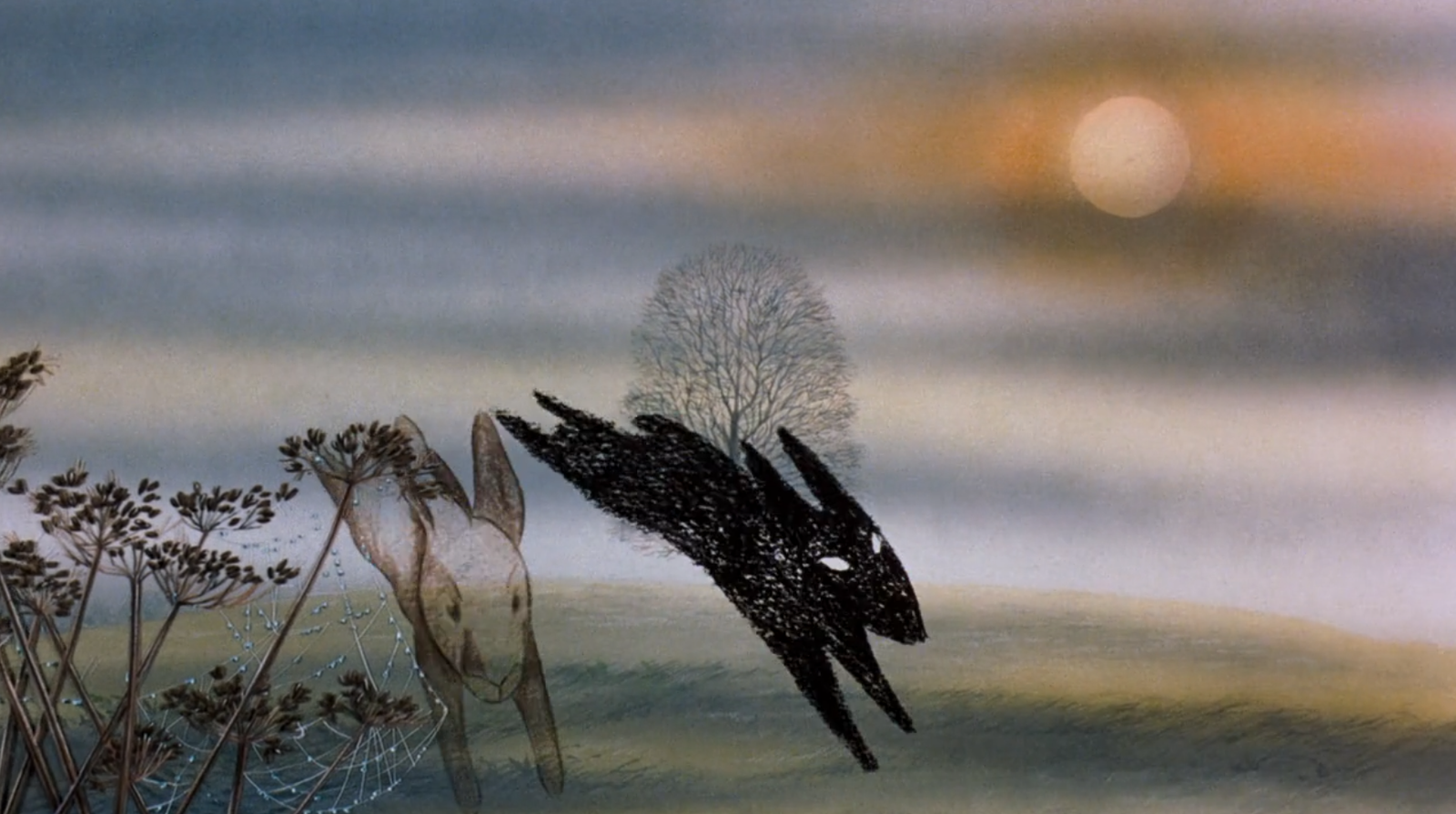
An ending … and renewal. Notice how Hazel’s form resembles El-Ahrairah, whilst the latter is now the Black Rabbit.
I’ve been in bed with flu and it has been a miserable time. I haven’t felt so ill for years. Whilst many of my symptoms have now lessened, my mind still feels out of kilter, fogged and slightly off-centre. A few nights ago, drenched with sweat and aching in every muscle, I awoke. Unable to sleep, I reached for my phone and put on YouTube. At the top of my feed was a clip from the 1978 Nepenthe film, showing the legendary final scene.
I didn’t watch, I just looked at the thumbnail of frail, old Hazel and felt my composure slip away.
It’s the most visceral piece of cinema I have ever encountered. Even now, 48 years on from seeing that scene at the ABC Gloucester Cinema, I still can’t watch it without tears falling. That little boy couldn’t understand why the nice rabbit had to die. It was devastating.
Even though I have spent more of my life understanding that the ending of the film is triumphant (Hazel and his colony have prospered, overcoming the thousand elil; he’s also been asked by none other than El-Ahrairah to join his Owsla as a true rabbit hero) rather than representative of defeat, that three year old’s gut reaction is as raw as ever. It was this reminder that triggered a fifty-something’s tears, just as it always does. I cried myself back to sleep.
At some point before first light I again awoke with my head full of that scene. I didn’t cry, but my heart slumped through into my diaphragm. For whatever reason, my flu addled mind transferred that upset onto my yearning to once again see real world rabbits by the beech hanger. More tears. What a mess.
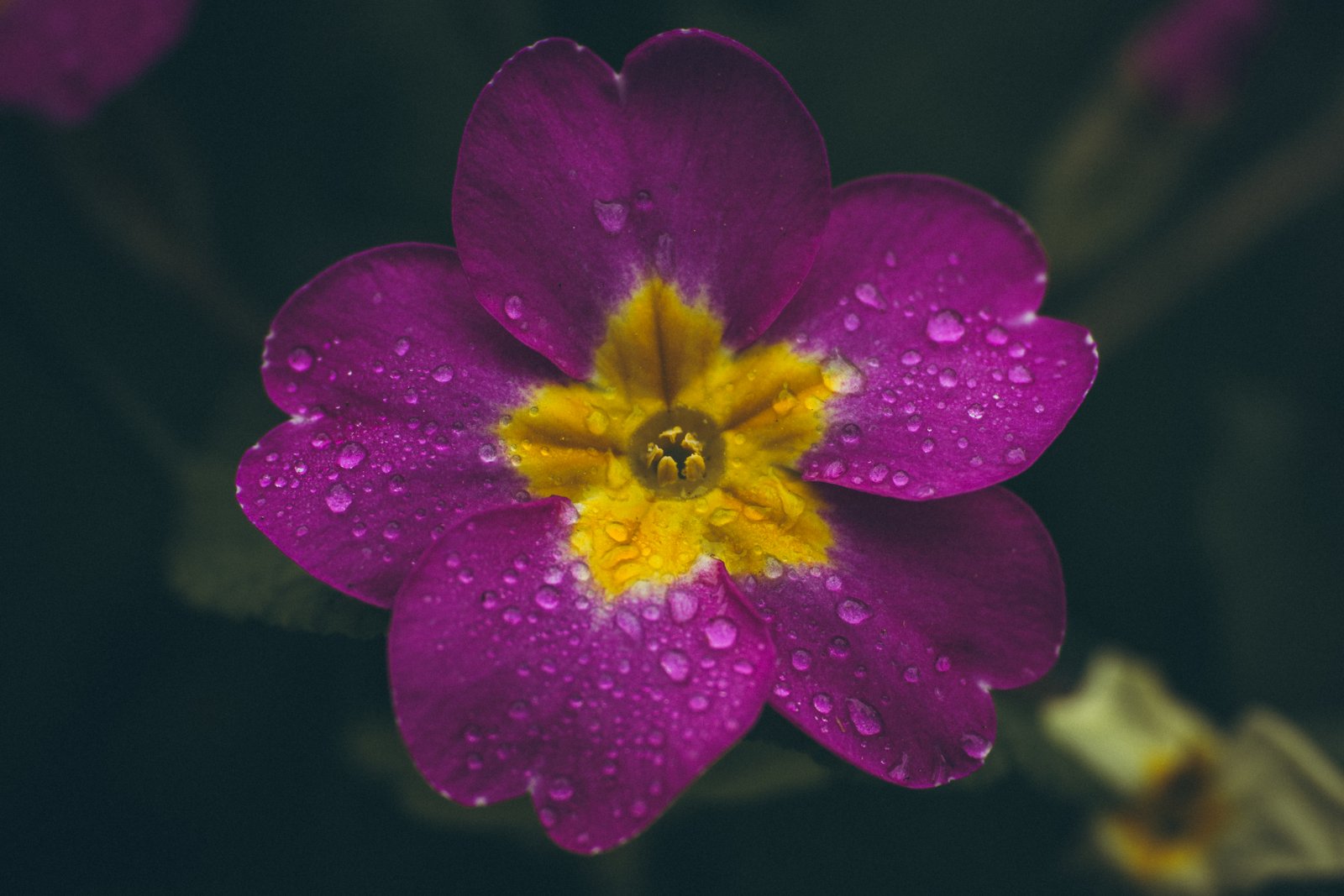
A primrose in full bloom, fittingly close to the grave of Richard Adams. Whitchurch Cemetery; April 2026.
Although I’ve still not fully recovered from the flu, the spare time I’ve had has made me think more about why that lack of rabbits has caused me so much upset.
To me, it links to that final scene from the film. In it, El-Ahrairah comes to take Hazel from this world. After Hazel accepts, the pair pass downhill, through a small area of woodland before taking to the skies and returning uphill and crossing the solitary, naked, stylised tree that symbolises ‘home’, Watership Down.
The passage in the novel’s Epilogue is more understated:
[El-Ahrairah] reached the top of the bank in a single, powerful leap. Hazel followed; and together they slipped away, running easily down through the wood, where the first primroses were beginning to bloom.
However, I also think this paragraph is just as powerful as its cinematic equivalent. The wood is the beech hanger on top of Watership Down, the home Hazel had helped to save, almost at the cost of his own life, from the Efrafans. The primroses are relevant as the novel begins in another wood, Slockett’s Copse, in Sandleford Park, with the simple line, ‘The primroses were over.’ At the beginning of the book (Chapter One, The Notice Board), the impending death of these flowers foreshadow the trauma of the Sandleford Warren’s fate, whereas at the close, the blooming primroses celebrate both the prosperity of the Watership Down warren and the eternal circle of life.
Without the rabbits by the beech hanger, it is as if that prosperity has been broken. Of course, I understand the difference between fiction and fact, but the writing of Richard Adams very much feeds into the spirit of place on Watership Down. You go there and you hope to see rabbits.
You desire to feel, in a small way, part of Adams’ legendary narrative.