The Lonely Places of Watership Down
Tuesday 3rd November 2026
Raising the hood of my coat, I began to consider how lonely Watership Down can be. Even the kestrels have flown for cover as the rain begins to fall once again. So much of the Down is hard to access and a new sign on the gate to the beech hanger warns visitors to keep out. Here with nobody and nothing to keep me company, I feel a million miles from civilization and life seems fragile. A solitary squirrel dashes out from under the gate to the beech hanger, sees me and runs back.
As I walked up through Cannon Heath Down and onto Watership Down in the rain and cold wind of a mid-October evening, it struck me that I hadn’t seen a rabbit up there since 2024. On the occasions I have witnessed them, they’ve been at the northern end of the beech hanger, just out in the open, next to the wooden log serving as a horse jump. They’d see me and scurry off back under cover. That seems like a very long time ago.
I’ve been assured through one of the Watership Down fans groups on Facebook that the rabbits can still be found on the Down, but they no longer seem willing to show themselves for me. Or, and I would like to think more likely, I’m just never there at an opportune moment.
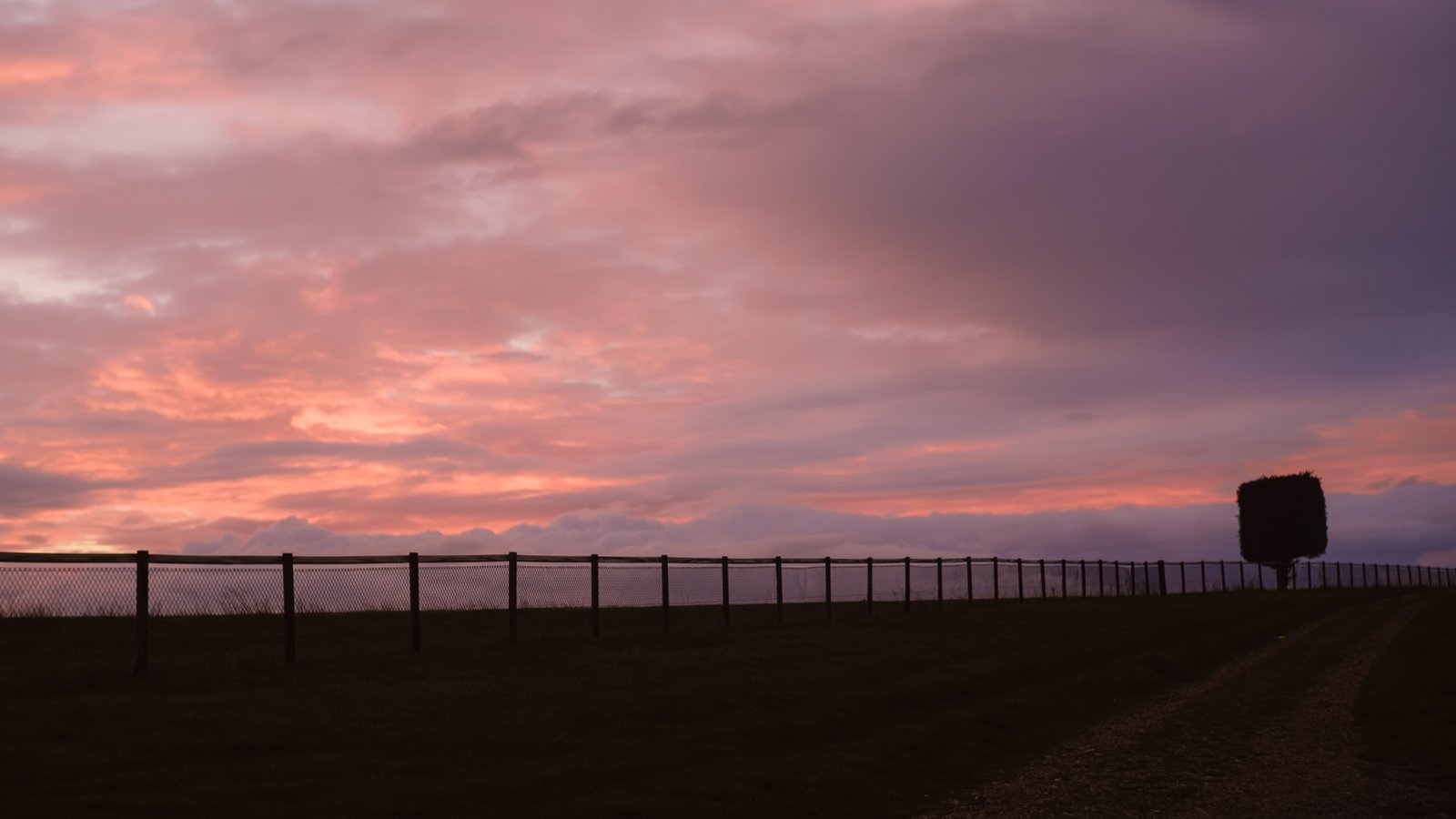
I had hoped to be fortunate this time, but even as the rain briefly halted and the last rays of dusk stole my attention through the clouds, the rabbits maintained their feat of elusive silence.
I realised that visiting Watership Down without encountering any rabbits is like going to the bakery and not seeing any cakes. It’s not the full attraction, but a massive part of it. Surely the whole point of a literary pilgrimage is to experience as much of a text as possible, even if that tale is fictional.
Suddenly, I felt very isolated. A firm, cold wind swept over the footpath alongside the Richard Adams beech tree and memorial. There hung the only two rabbits I would see; sweet trinkets left as offerings by another regular visitor.
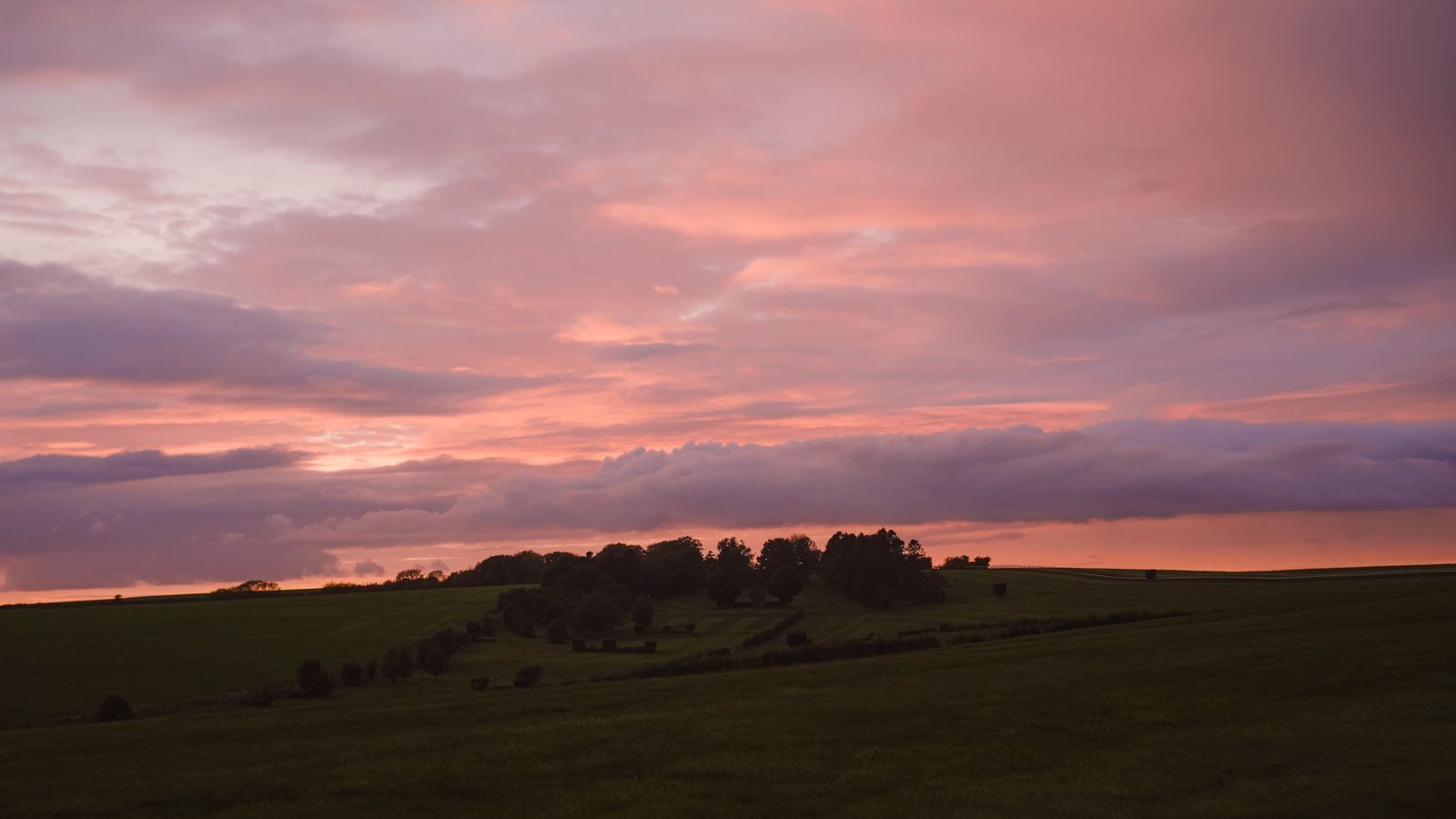
Looking back to the beech hanger from Cannon Heath Down. October 2026.
Raising the hood of my coat, I began to consider how lonely Watership Down can be. Even the kestrels have flown for cover as the rain begins to fall once again. So much of the Down is hard to access and a new sign on the gate to the beech hanger warns visitors to keep out. Here with nobody and nothing to keep me company, I feel a million miles from civilization and life seems fragile. A solitary squirrel dashes out from under the gate to the beech hanger, sees me and runs back.
Loneliness and isolation mark some of the other places I’ve visited on my travels through the Watership Down landscape. Three stay strong in my mind and all are different. I consider them in their modern state, in daylight, as opposed to their representation in the novel.
The most obvious is Sandleford Warren, where the novel begins. Originally landscaped as the grounds of the nearby Priory, it is painted by Richard Adams as a sleepy, serene, rural backwater. Since the novel’s publication, the boundaries of Newbury have enveloped the northern and western edges of the park. Waiting in a state of flux for the diggers to imitate art, Sandleford feels unloved. Bittersweet beauty is everywhere. You can hear the constant drone of traffic and, on weekends, the sound of rugby being played close by. Suburbia may be just over the brow of the hill, but down in that valley where Adams placed the warren, you feel part of a more natural world and you are usually alone. You aren’t in either the country or the town proper. It’s an edgeland where floodlights can be seen beyond fallen trees and the skeleton of a muntjac deer. Here, you feel eerily cut off from the rest of the world.

Sandleford Warren.
Still within Sandleford Park, the crossing point on the River Enborne feels even more isolated, but still pleasant.
Stocky holly bushes occupy gaps between much taller trees whilst the old paths have disappeared. Cobwebs hang on branches, twigs snap to echoes and squirrels dash for safety. You stumble through and feel enclosed, like the spirit of this place doesn’t really want you to leave. Even in winter, when the trees are bare and things seem more open, there’s generally nobody else here. On one occasion I encountered ‘a dog loose in the woods’ who was simply rummaging and ignoring the whistles of his frustrated owner. Beyond that solitary event, there’s just the sounds of traffic on the B4640, buzzards, the occasional fox bark from upstream and the low rushing of the Enborne. But it’s weirdly comforting to be away from civilization in a little haven of narrow woodland with such literary significance.
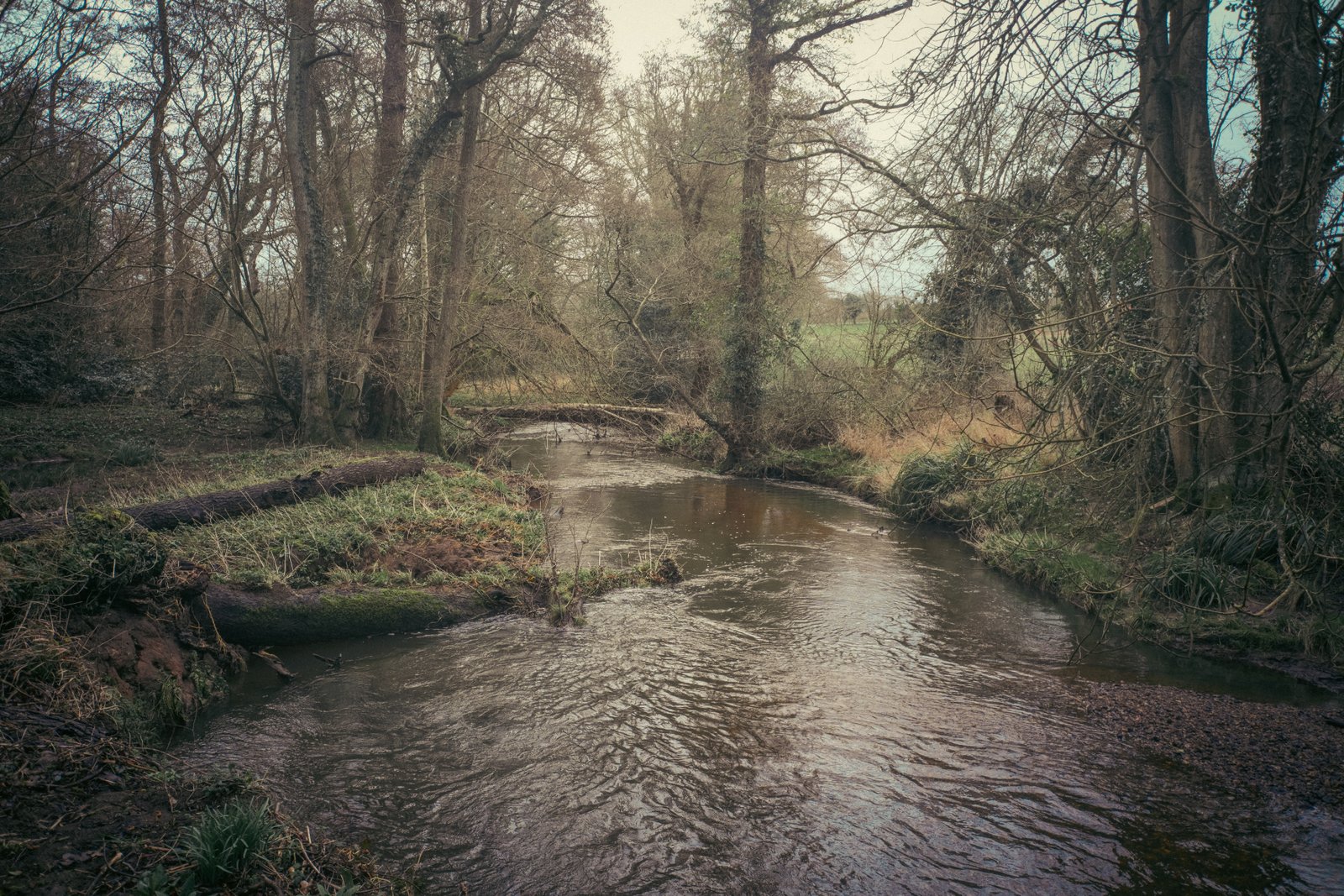
The Enborne crossing point.
The final lonely place is a very particular stretch of Caesar’s Belt. It is not a location I’ve walked or stopped on, hence why I’ve never included a photograph of it, and it can be found just south of where the Cole Henley Road joins the B3051 up to White Hill above Kingsclere. Holly describes it in Chapter Twenty Seven, ‘You Can’t Imagine it Unless You’ve Been There’:
‘And sure enough, we found a road beside this wood. It was a very lonely, empty road, but all the same, I didn’t want to hang about there, so we went straight through the wood and out the other side.’
The emptiness described by Adams still holds today and its spirit is extremely different to the Sandleford locations. Here, the road hugs the northern edge of the Belt for more than half a mile as it slopes aggressively downhill. In wet, cold and windy weather it is as bleak as anywhere else on the downland. My best friend had introduced me to this part of the route between Kingsclere and Whitchurch back in 2020, before I had known Watership Down was nearby. Even then I thought it was a remote, empty and uninviting spot. It’s somewhere that needs a photo for the sake of completeness, but, more importantly, in the novel it serves as a portent of what lies ahead for Holly, Strawberry, Silver and Buckthorn on their journey to Efrafa.
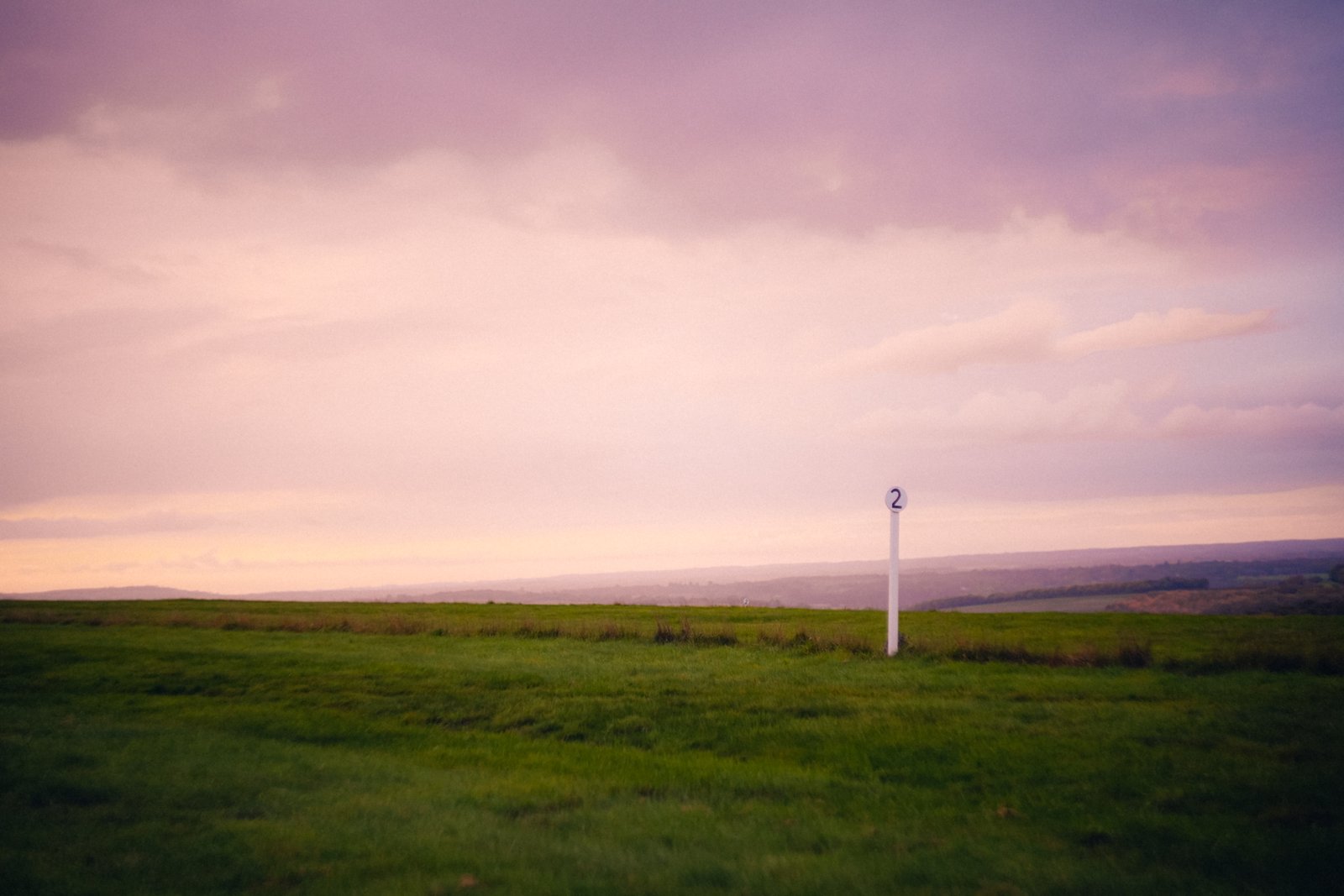
The Watership Down gallops at sunset. October 2026.
Of course, these three places are not the only ones in the novel where isolation presents itself. Newtown Common and Newtown Churchyard are two more obvious examples, though both only feature at night where almost every location has an element of solitude around it. And Nuthanger Farm must have seemed so far from Watership Down during Hazel’s ill-fated raid.
As I walk back from Watership Down, towards White Hill and the mast on Cottington’s Hill, the rain and wind ease. The sun is sinking and I’m able to catch some photos as it rapidly descends behind the beech hanger. With nobody else here, I can take everything in. I don’t have to avoid anyone’s dogs, forced smiles or questions.
It’s just a shame the rabbits still won’t show for me.