The 1978 Film: Folk Horror?
From my perspective, the closest Watership Down comes to genuine folk horror is during the all too rushed scenes set in and around Cowslip’s Warren and its depressing death-cult. The Sandleford rabbits are invited to join their peculiar hosts and find their detached behaviour puzzling. (The ‘old ways’ are those of our heroes; Cowslip and his companions live in the moment.) Tension quickly grows as the two groups of rabbits quickly display their incompatibility, with Cowslip taking on Silverweed’s infamous dark poem as his own. The untrusting Fiver storms out, followed by the confrontational Bigwig who is subsequently snared by a concealed wire as he leaves the scene. Bigwig’s struggle is as engrossing as it is repulsive, flies descending on him as spittle and blood flow from his mouth.
Alongside my love of all things Watership Down, I have a fondness for the hills and open fields of southern England. I grew up in a small Cotswolds town and as a bored teenager spent plenty of cold evenings walking with friends after dark to quietly socialise whilst keeping our body temperatures up. Without any light source of our own we would wander down footpaths, pass over common land and pace single file down narrow, walled country lanes. It may sound hauntingly idyllic, especially as we were sensible types, but we were ultimately children from a very small semi-urban environment. We met under sickly yellow streetlights and had to walk for fifteen minutes to place those man made illuminations behind us.
Out on the unlit footpaths, in the woods and carefully picking our way over stiles, we were aliens in a largely unfamiliar landscape. And didn’t we know it. We would never venture alone, for whilst we embraced our surroundings each and every one of us was aware that even the most serene, moonlit hillside could hold a hidden danger. Puddles and wet slopes are treacherous, horses can bite attention giving hands, barbed wire cuts, crumbled gravestones are unseen obstacles. Then there were those concerns that seem more ludicrous to an older mind, but were very realistic at the time: the woman who lives in that house is known to be a witch, my dad said this farmer puts down man-traps, people still see the ghost of the white greyhound next to the ruins of the haunted house. In a rural location that isn’t your own, where you are a naive outsider, it is easy to fall foul of the hidden traps that surround you.
It should be no surprise that my appreciation of the dark side of rural England is reflected in some of the films and television programmes I have grown to love. The 1978 Watership Down adaptation fits the bill, as does David Rudkin’s eerily romantic Penda’s Fen, a 1974 production where the conservative world of a rural vicar’s pompous son is thrown upside down by a string of personal discoveries and odd visions. This BBC play is set to the stunning backdrop of the Malvern Hills and the Worcestershire-Gloucestershire borderlands of the late composer Edward Elgar.
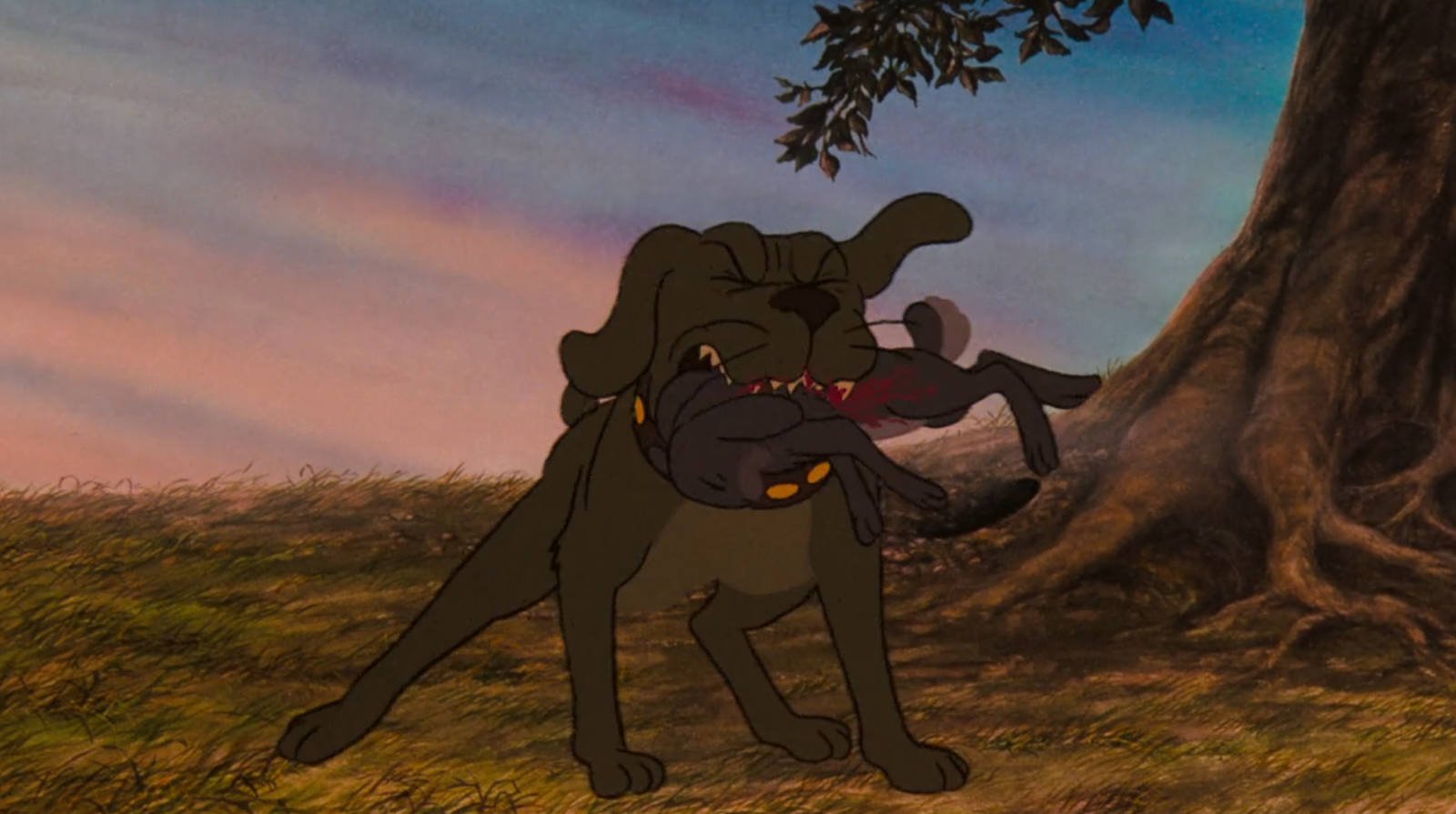
The film drips with moments of blood and violence; Bob the Nuthanger Farm dog deals with the Efrafans on top of Watership Down.
Until the last five years or so I had always viewed Watership Down and Penda’s Fen exclusively as unsettling adventure and coming-of-age dramas respectively, each set within their own very powerful rural landscapes. However, since around 2020 I’ve become increasingly aware of both films being picked up as examples of the folk horror movie genre. Whilst much of the discussion occurs on social media, more formal websites offer their own takes. Just two examples come from Agent of Weird who describes ‘furry folk horror’ and Howard Ingham’s Room 207 Press.
What is Folk Horror?
According to Ingham, ‘Folk horror…has a sense of place, and the story is influenced heavily by its location; and this place, which is evocative in its own right, is isolated; the isolation leads to a skewed moral compass, or unusual beliefs, and the combination of all three of these – isolation, landscape and weird morality – leads to a summoning, or a happening.’
Adam Scovell, in his 2017 book Folk Horror: Hours Dreadful and Things Strange, offers a slightly different take, laying down three criteria for a work to be defined as belonging to the genre:
• A work that uses folklore, either aesthetically or thematically, to imbue itself with a sense of the arcane for eerie, uncanny or horrific purposes.
• A work that presents a clash between such arcania and its presence within close proximity to some form of modernity, often within social parameters.
• A work which creates its own folklore through various forms of popular conscious memory, even when it is young in comparison to more typical folkloric and antiquarian artefacts of the same character.
Folk Horror Themes
In real terms, folk horror movies tend to feature five typical themes that I’ve noted:
- An Isolated Rural Setting:
Plots unfold within geographically or physically remote locations distinct from modern, contemporary society. For example, country villages, forests, islands or lake lands. Some films are set in the present day, whilst others may be historical pieces. - The Menace Of Nature:
The rural setting is a character in itself, or is very close to being one. Regardless of its appearance, either attractive or daunting, the landscape harbours some kind of malevolent or supernatural power. - Old Ways:
The inhabitants of the isolated location live an existence laced with pagan, folk and ritualistic beliefs and practices. These are typically ancient in their origin, reflecting the traditions of days-gone-by. Sometimes, they will involve sacrifices or violence to appease a higher power. - The Outsider:
The main protagonist is an outsider, sometimes naive, occasionally wilfully ignorant to the local population’s beliefs and way of life. - Cultural Tension:
The differences between the lifestyles and beliefs of the outsider and the inhabitants of the isolated setting are a cause of unease and tension.
The obvious film that comes to mind from all of these definitions and themes is 1973’s The Wicker Man, starring Edward Woodward and Christopher Lee. A deeply Christian police sergeant, Neil Howie, is dispatched to the isolated Summerisle to investigate the disappearance of a young girl, Rowan Morrison. On the island, Howie discovers a community who have abandoned Christianity to embrace a ritualised, highly sexualised, pagan way of life. Howie is appalled by their practices and the obstructions he faces whilst searching for Morrison. A combination of his zealotry, temper and foolishness lead to his ultimate downfall.
Another textbook folk horror film to incorporate these themes is 1971’s The Blood On Satan’s Claw. Set in an early 18th century English village, a visiting judge is witness to the horrors afflicting a wealthy household following the accidental exhumation of a bizarre skull in a neighbouring field. Though the judge initially dismisses fears of witchcraft as superstitious nonsense, he leaves to conduct further research. On his return he finds the village consumed by the excesses of a dark cult practising rape and sacrifice to empower the demon in their midst.
Against such examples, can Watership Down really be called folk horror?
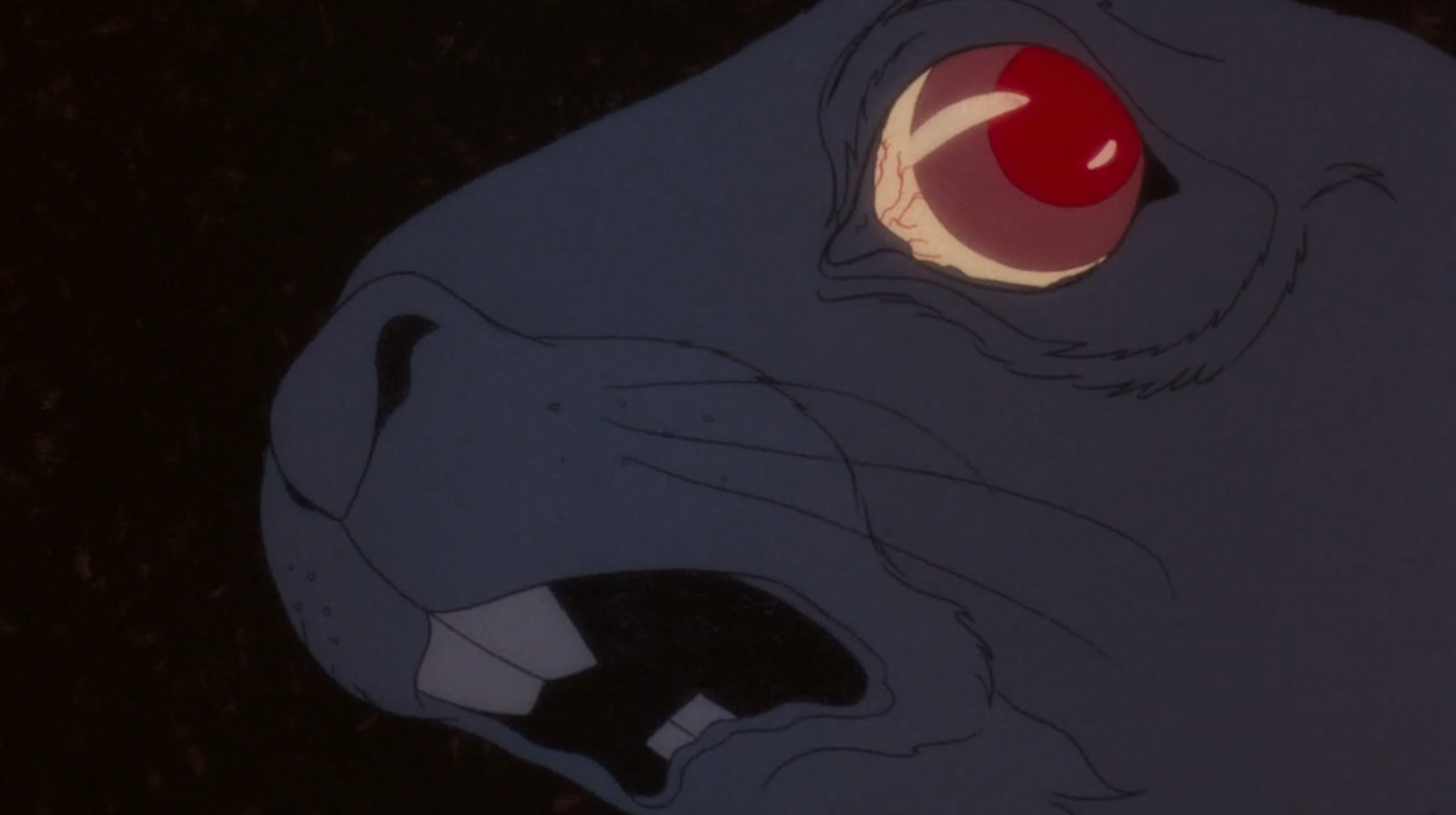
For my mind, the quasi-psychedelic gassing and destruction of Sandleford Warren is the film’s most dreadful sequence.
Well, if you’re of the view that films featuring bad stuff happening in quiet rural areas are folk horror by nature then yes, Watership Down is folk horror. But, to me, this feels like reappropriation.
Put simply, Watership Down is not a horror film. It may have traumatised many children of my generation but it is, first and foremost, an adventure story in which the protagonists overcome the harsh realities of their environment through teamwork, belief in each other, effective leadership and the taking of calculated risks. That is the spirit of the tale.
Likewise, the rural setting of the film is powerful for its beauty and the dangers it conceals, but that does not make Watership Down a folk horror film. Neither do events like the gassing of Sandleford Warren or the brutal fighting between Woundwort and Bigwig. They are graphic, but not indicative of folk horror or the wider horror genre.
Furthermore, there is no ‘weird’ or ‘unusual morality’ beyond Cowslip’s Warren. At Efrafa, Woundwort is a domineering dictator competently assisted by his male followers. The menace here is not concealed or masked; it is on full display from the moment we first see an Efrafan patrol. You are with the Efrafans or you are against them. It is that simple.
If there are folk horror themes that run throughout Watership Down in a central capacity, they are twofold.
First, the menace of nature. In the film, it is best represented during the escape through the woods of Sandleford Park and in the eerie grounds of Newtown Church where the rabbits are attacked by rats. The added character Violet is later abducted by a buzzard, from nowhere, as she ventures out from under broad bean plants to feed.
Second, folklore is central to the Sandleford/Watership Down rabbits’ way of life. It can be both eerie and unsettling to the viewer, though not to the characters. For example, the film begins with the oddly animated Blessing of El-ahrairah sequence. Most notably, we see El-Ahrairah and the Black Rabbit as one and the same during the epilogue where Hazel moves on from this world.
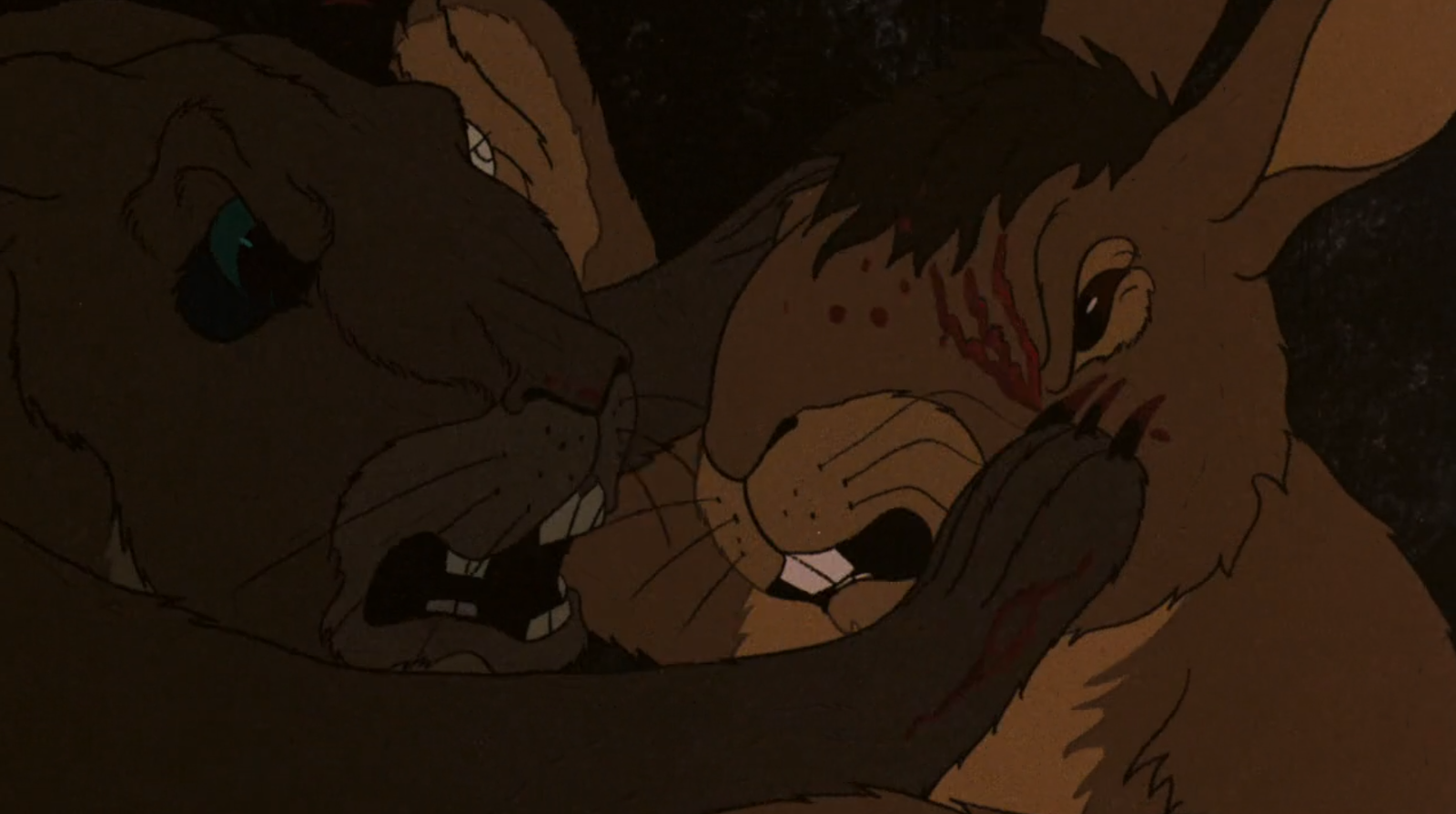
The brutality of the 1978 film speaks for itself: Bigwig defends the Watership Down warren from Woundwort.
From my perspective, the closest Watership Down comes to genuine folk horror is during the all too rushed scenes set in and around Cowslip’s Warren and its depressing death-cult. The Sandleford rabbits are invited to join their peculiar hosts and find their detached behaviour puzzling. (The ‘old ways’ are those of our heroes; Cowslip and his companions live in the moment.) Tension quickly grows as the two groups of rabbits quickly display their incompatibility, with Cowslip taking on Silverweed’s infamous dark poem as his own. The untrusting Fiver storms out, followed by the confrontational Bigwig who is subsequently snared by a concealed wire as he leaves the scene. Bigwig’s struggle is as engrossing as it is repulsive, flies descending on him as spittle and blood flow from his mouth.
All said and done, I simply cannot describe Watership Down as a folk horror film. Whilst it shares some themes as the genre, these are not enough for an adoption. Neither can I describe Watership Down as an example of a straightforward horror film. Sure, it contains scenes that can cause upset to young viewers, though much of the shock and fright is grounded in the simple brutalities of both nature and general human attitudes towards wildlife. The latter is, to use a term borrowed from author Hannah Arendt, indicative of the ‘banality of evil’, which, when you think about it from a fictional rabbit’s perspective, echoes the film’s legendary tagline: ‘All of the world will be your enemy, Prince with a thousand enemies. And when they catch you, they will kill you…’
Further reading
If you want to learn more about the folk horror genre, I recommend:
Howard David Ingham (2018) We Don’t Go Back: A Watcher’s Guide to Folk Horror, Swansea: Room 207 Press
Adam Scovell (2017), Folk Horror: Hours Dreadful and Things Strange, Leighton Buzzard: Auteur Publishing