Herbert Plantation: Not Newtown Common
It’s fun to imagine the tired Sandleford rabbits making their way along the path, away from where I’m stood with my camera, especially as it was here where Hazel shared one of my favourite lines from the story: ‘Come on, then, Acorn,’ he said. ‘You want to run—I’ll run with you.’
On the second night of their journey away from Sandleford Warren, Hazel’s rabbits make their way through the trees, craters, heather and heathland of Newtown Common in northern Hampshire. After an exhausting, tense and troubled night, they finally emerge into open fields close to High Wood and the surroundings of Cowslip’s snared warren.
It’s a very neat journey, but in reality Richard Adams has lumped together the linear crossings of Newtown Common, Burghclere Common and, finally, Herbert Plantation into one—presumably to make things easier for the reader.
Whilst I had previously walked across the part of Newtown Common’s eastern section through which the hlessil would have most likely travelled, as well as the part of Burghclere Common that hasn’t been turned over to housing development, I had never been crossed the boundary of Herbert Plantation. So, on a very wet morning in mid-February 2026 I decided to finally try and make sense of that last leg of the journey over the heather and grab some photographs:
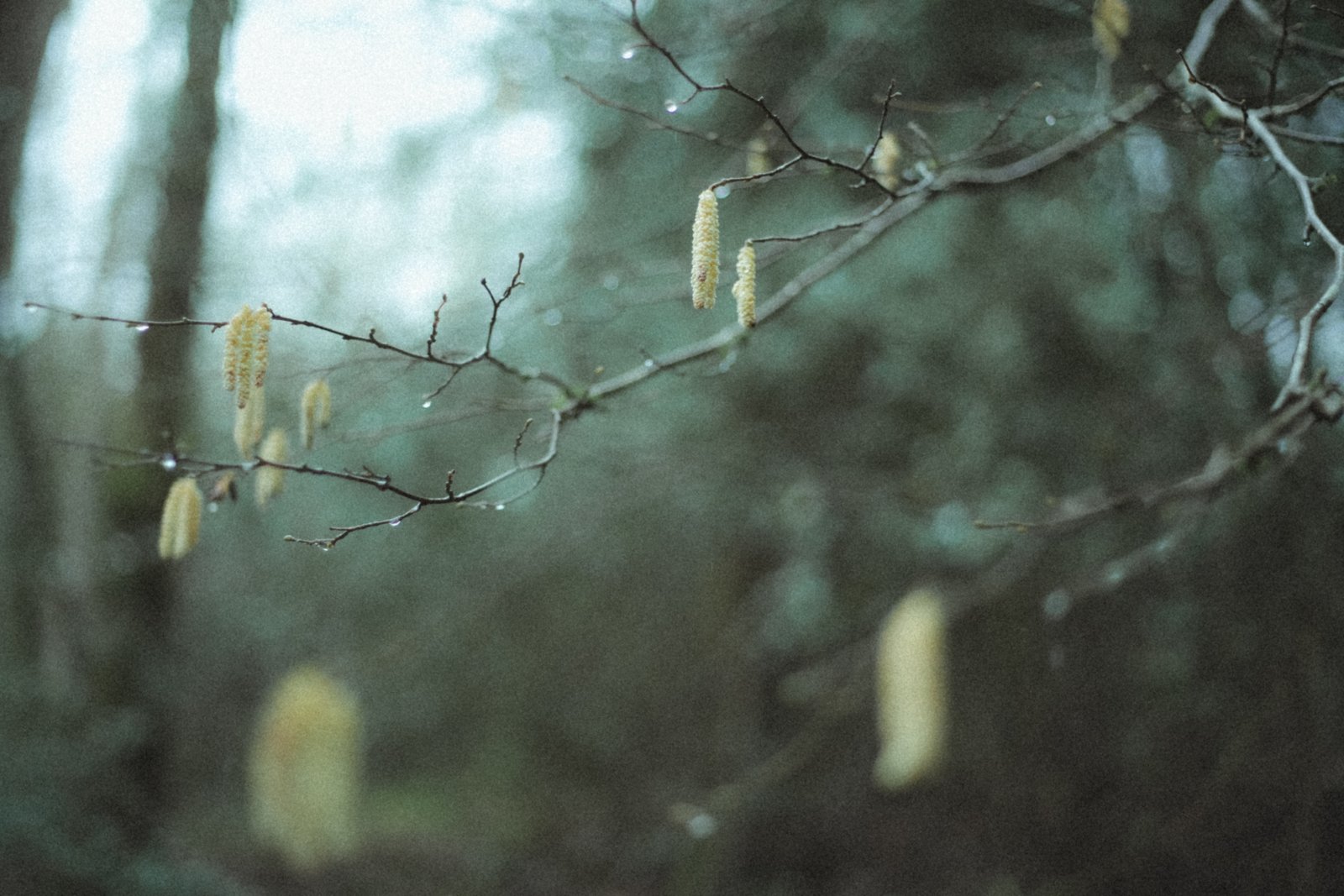
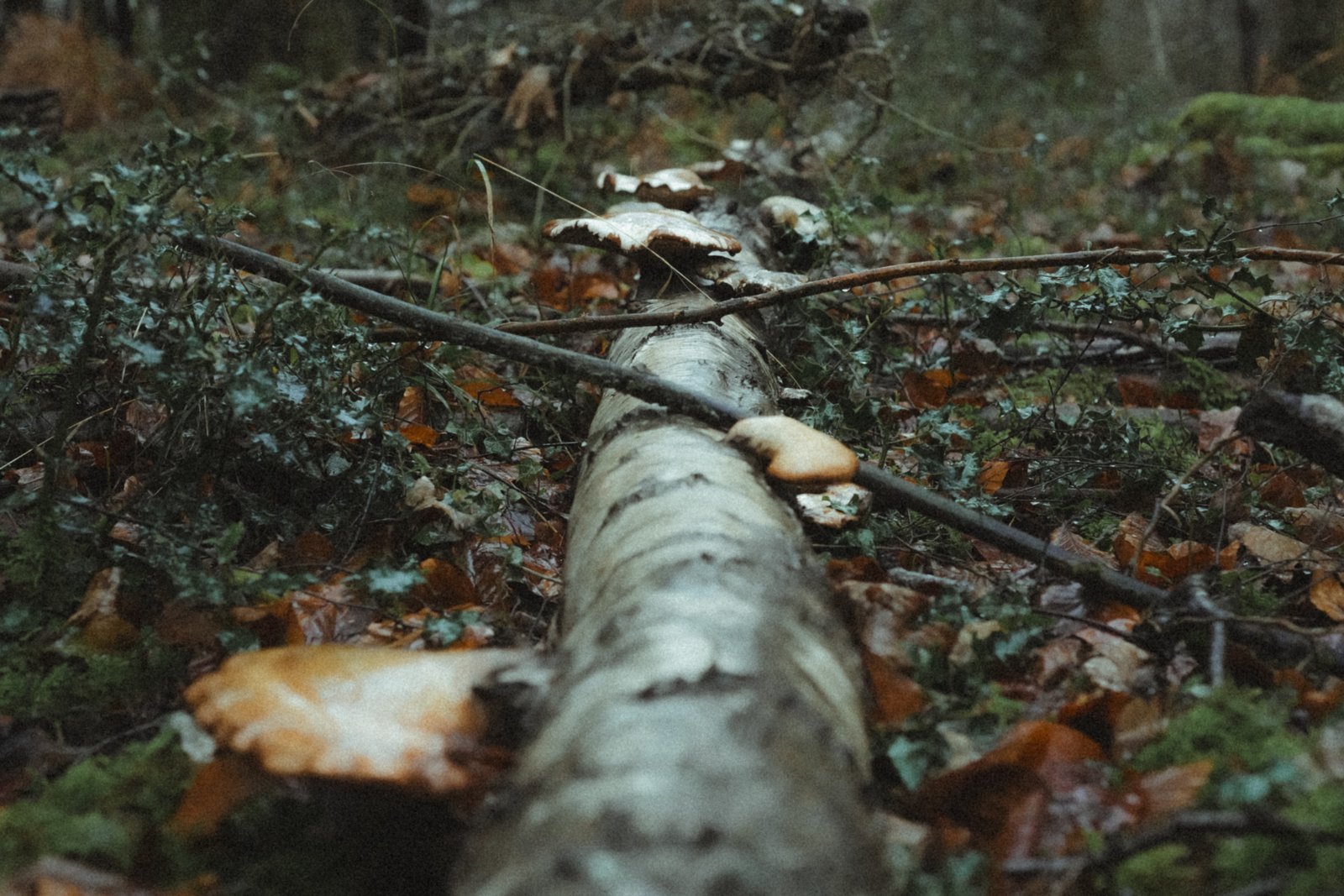
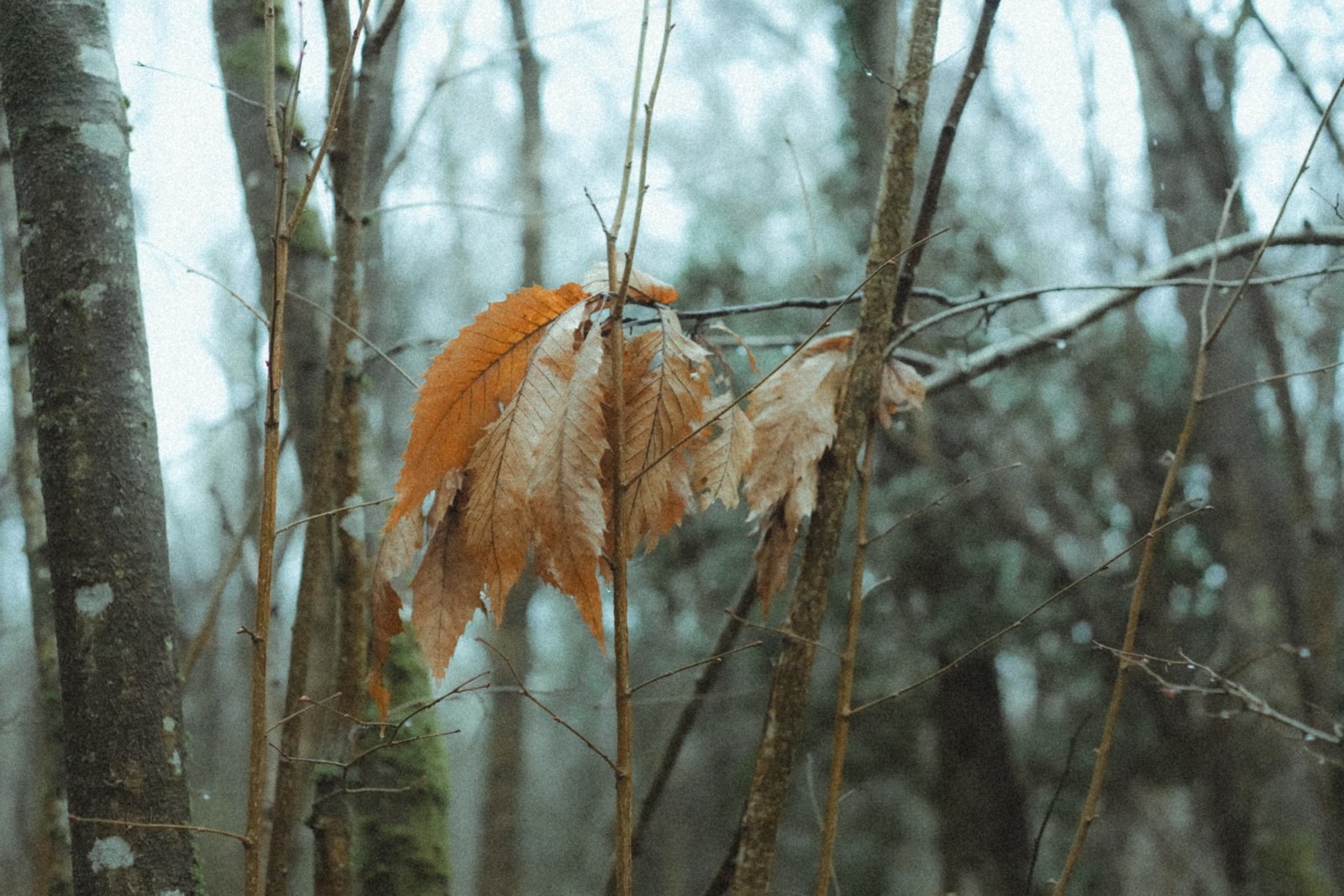
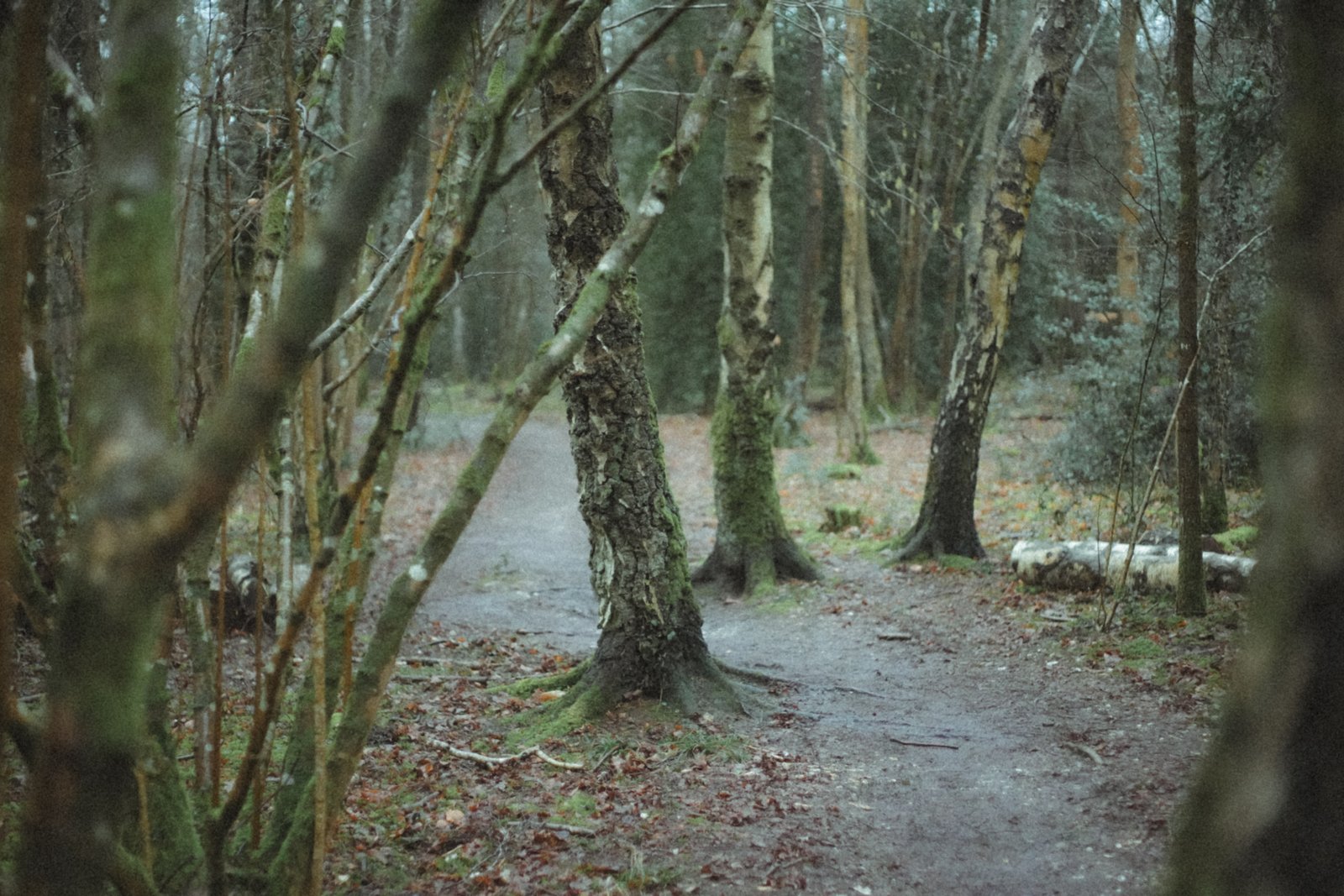
Did I say heather? In 2026 there is some of the stuff, but numerically very little when compared to the abundance of trees that provide a little cover from the heavy rain. An Ordnance Survey map from the mid-20th century shows Herbert Plantation to have been a very different place to the one it is now. Then, much of the topography was heathland. However, the forestation of the area seems to have begun in the 1920s with the establishment of a larch plantation, then followed between 1955 and 1957 by six acres of pine and Norway spruce.
I could have walked around the trees lamenting the loss of the heather and heathland for a long while, but I decided to something a little more useful with my time and concentrate on exploring the possible sites where the rabbits may have passed into the vicinity of Cowslip’s warren.
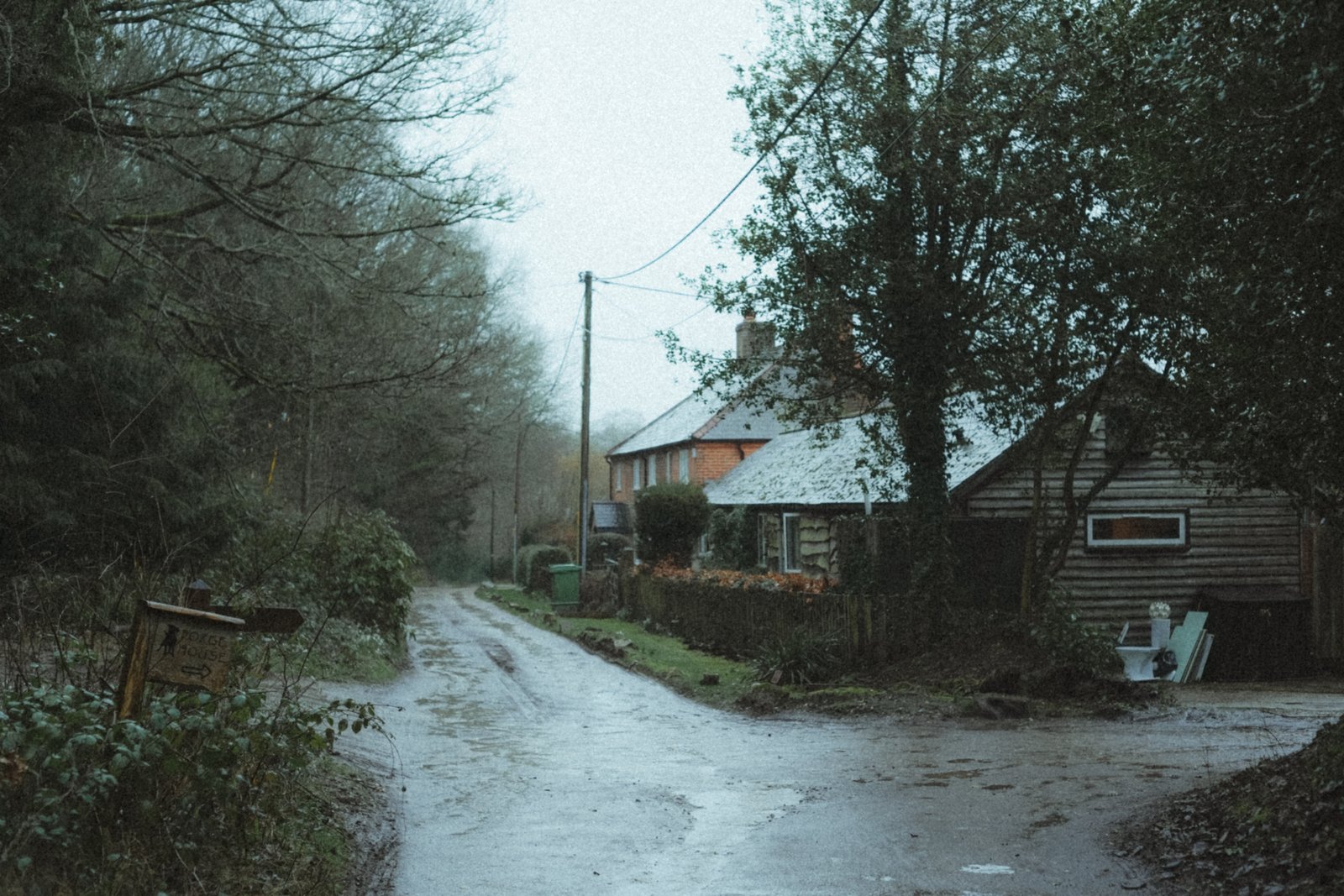
The better end of Ox Drove…
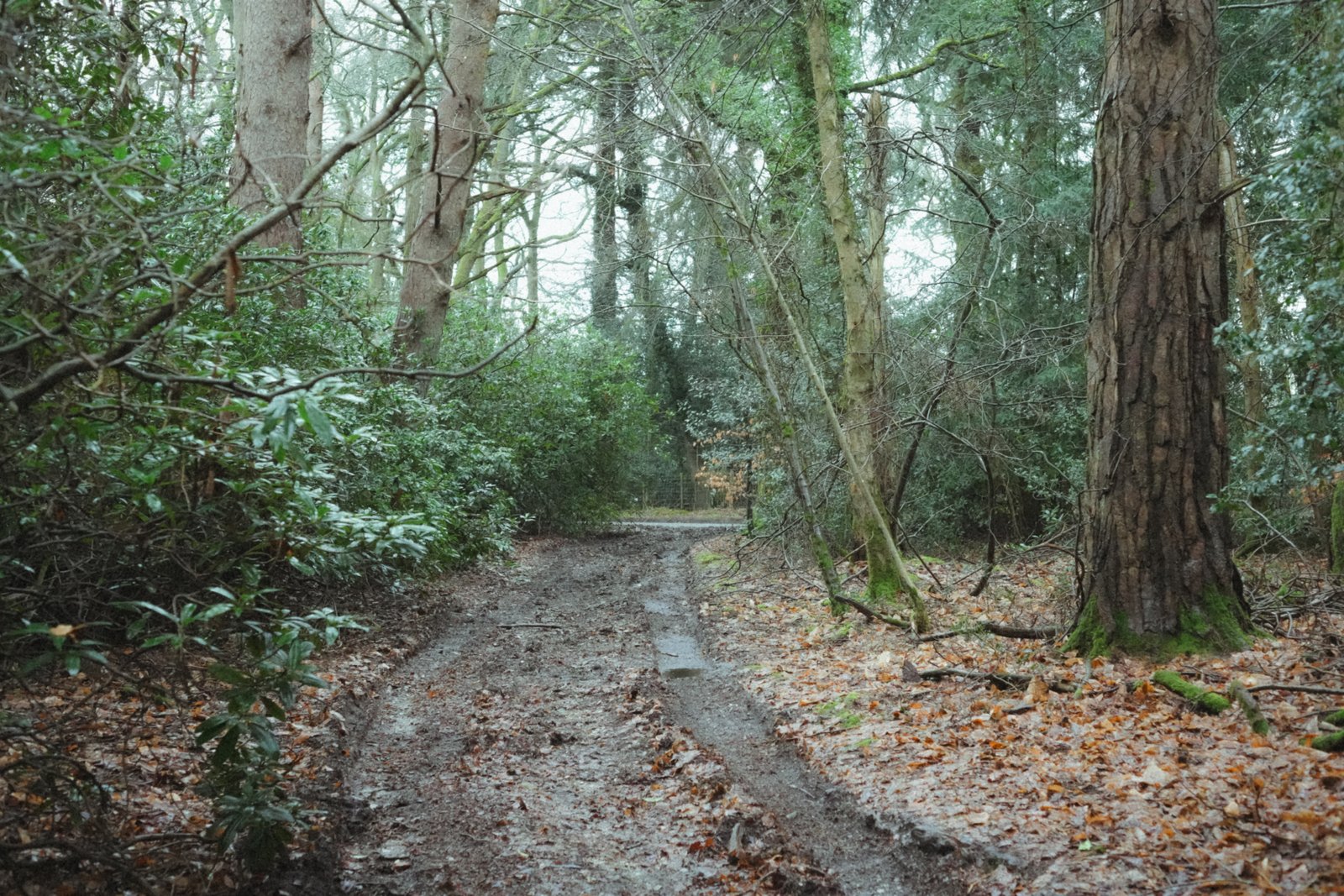
…and the muddy end
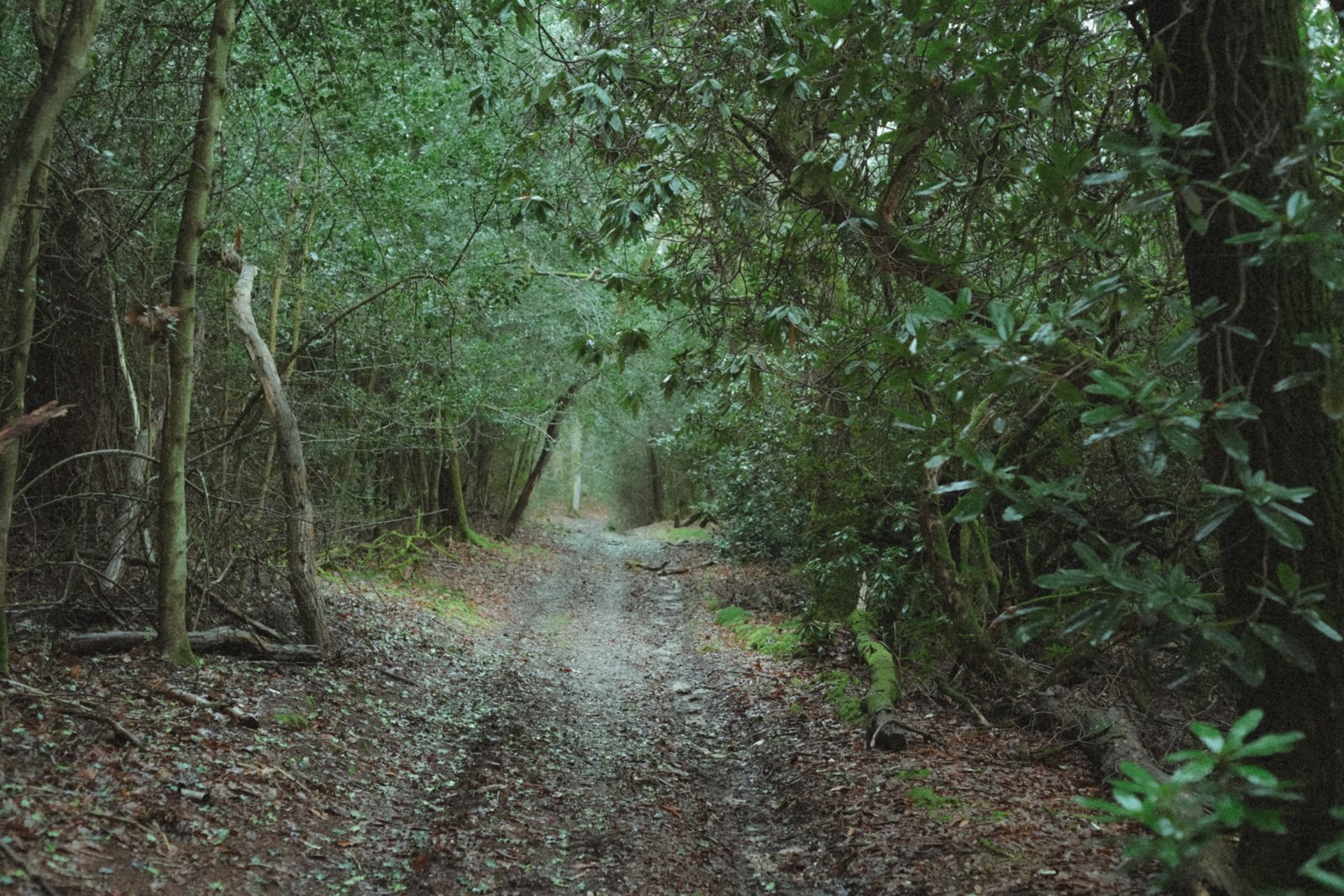
Lots of trees. Lots of mud.
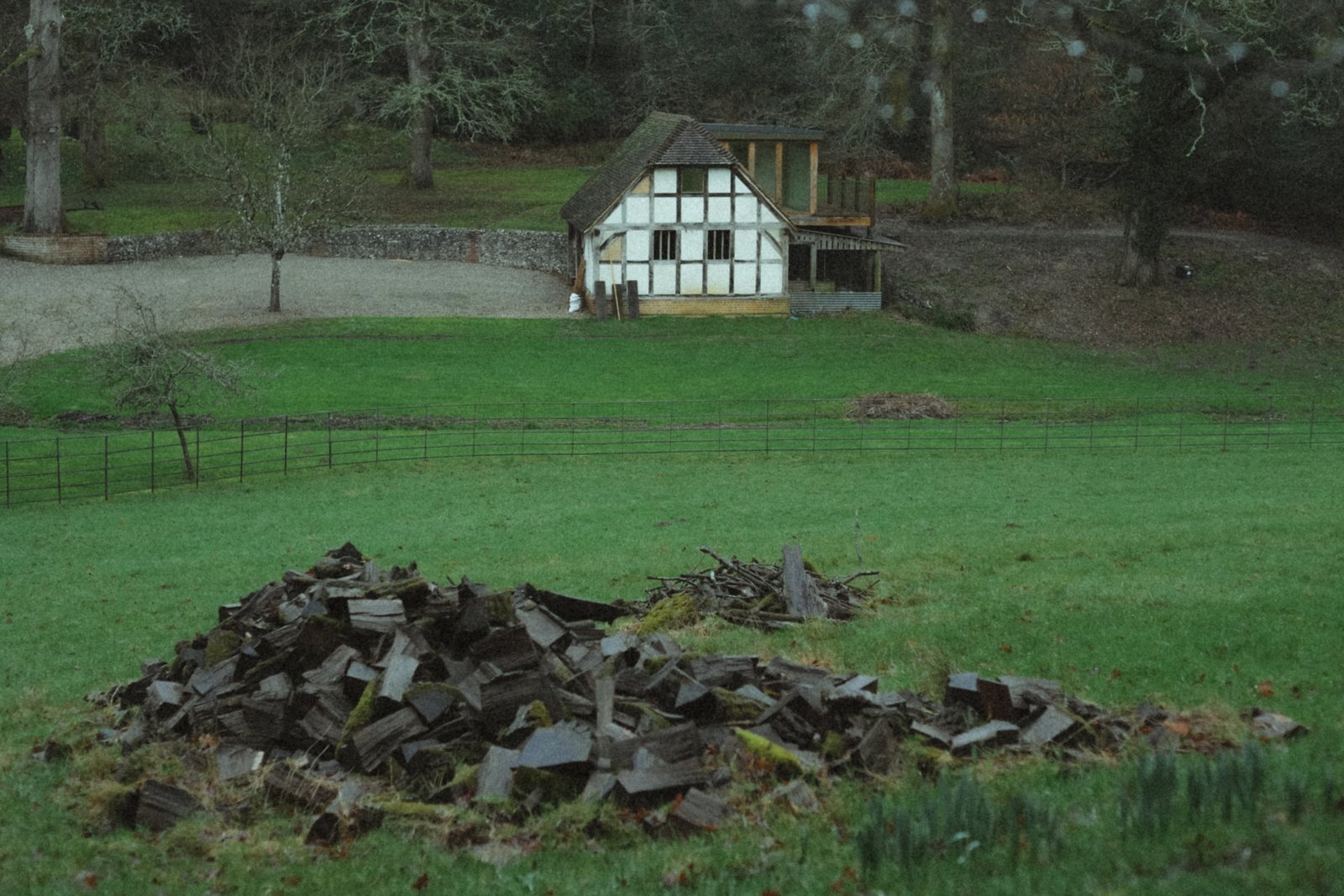
Sheltering under trees I saw this beautiful timbered building.
In Chapter Eleven, Hard Going we read of the rabbits’ leaving the heathland behind them:
The light grew stronger and soon [Hazel] could see that a little way ahead there was an open track of bare gravel. He limped out of the heather, sat on the stones and shook the wet from his fur. He could see Fiver’s hills plainly now, greenish-grey and seeming close in the rain-laden air…
He turned round. The gravel track led downhill into a narrow belt of silver birch and rowan. Beyond was a thin hedge; and beyond that, a green field between two copses. They had reached the other side of the common.
To get to what I believe is that point I decide to continue in the increasingly heavy rain and start heading east along the unmetalled Ox Drove. I pass the verge of Herbert Plantation, scattered with snowdrops and small, early daffodils. The track dips downhill and around to the right next to a greenhouse. A few yards on is a small ford, less than half a foot deep, despite the endless February rain. I cross it using a small, stone pedestrian bridge and head on uphill. It is here where the slope becomes treacherous, covered with a slushy mix of gravel, mud and rotten leaves. I carry on, needing to stop under trees for five minutes to avoid the worst of a very unpleasant, strong shower. Whilst here, two muntjac deer wander by, without noticing me.
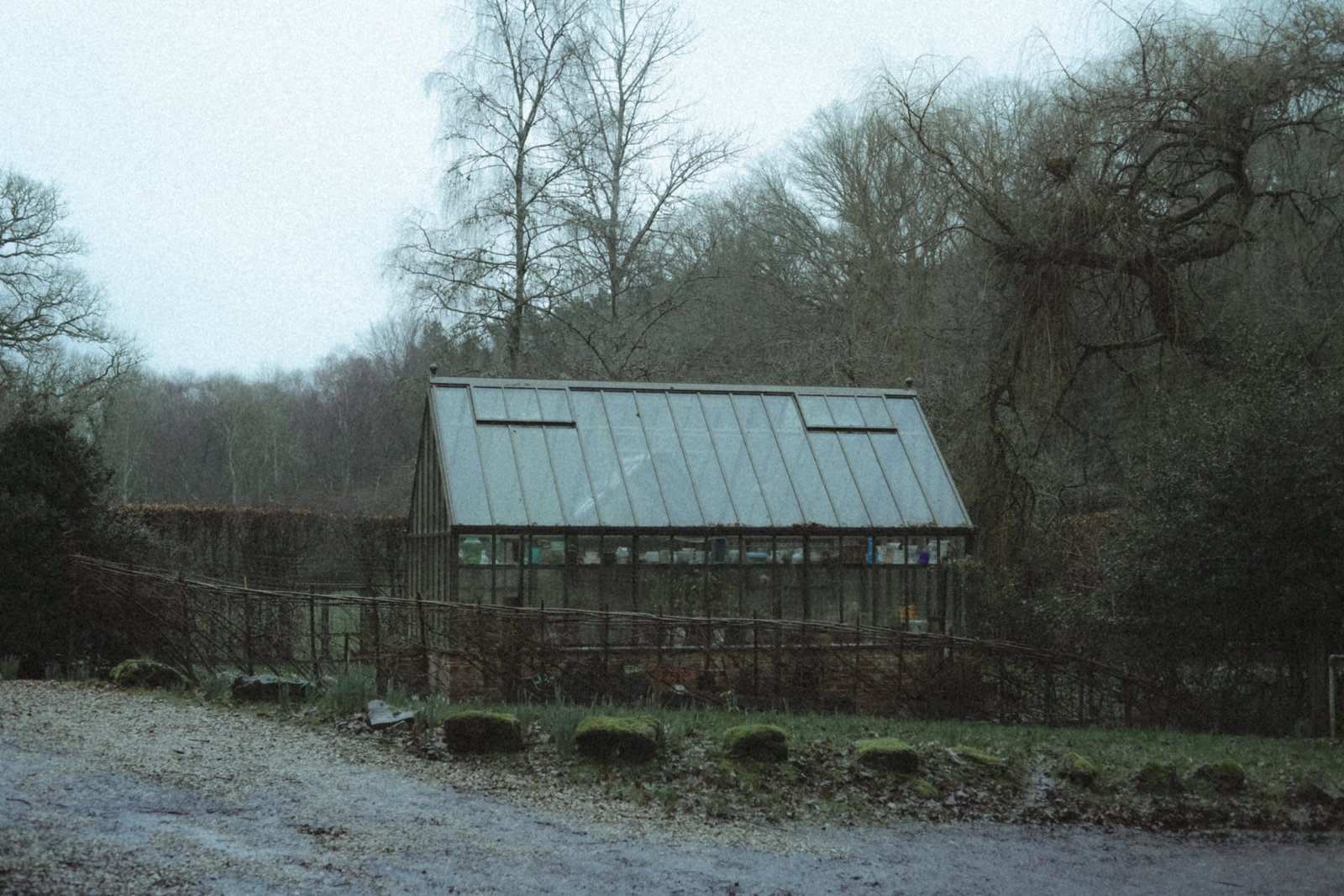
The greenhouse by the ford.
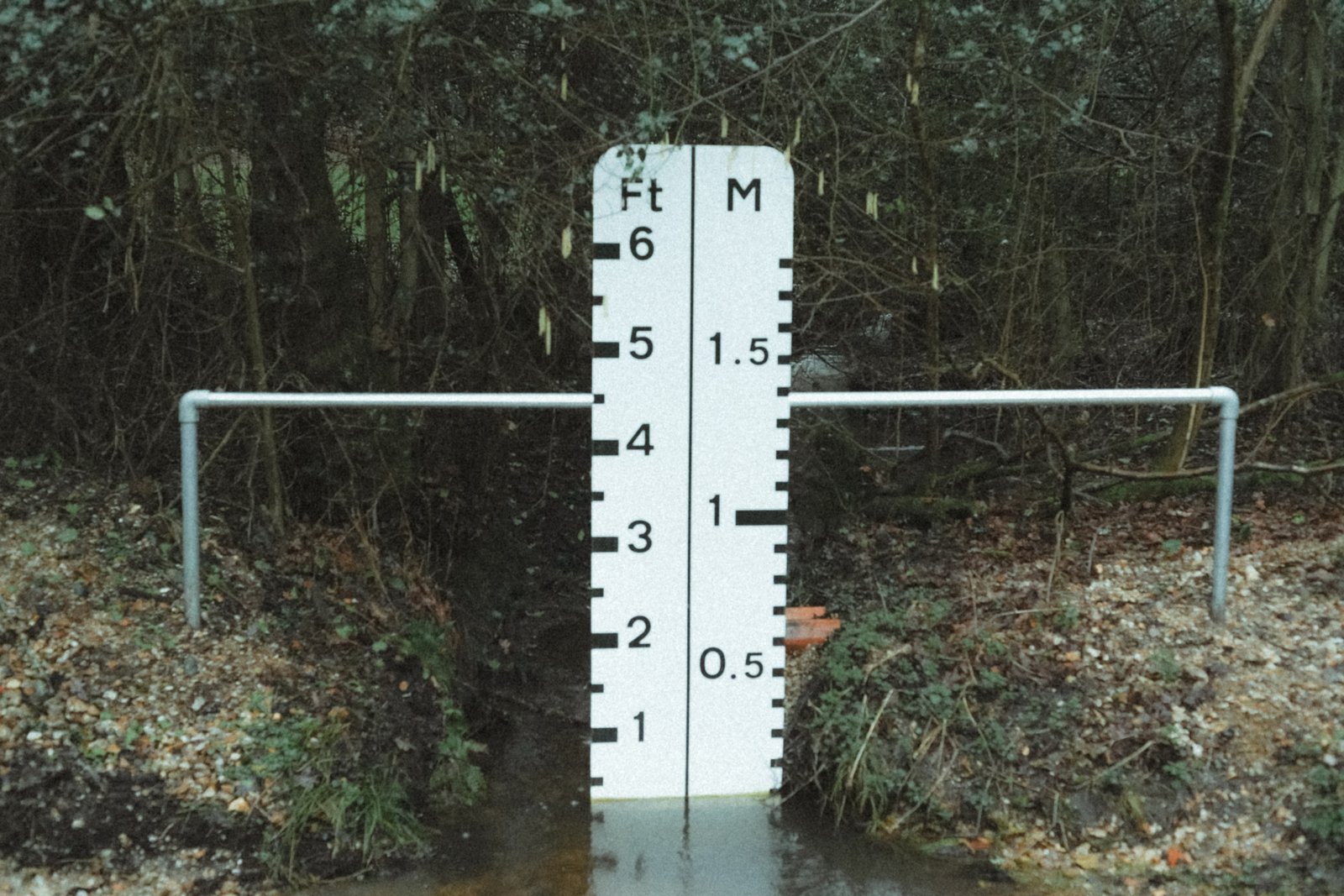
The ford.
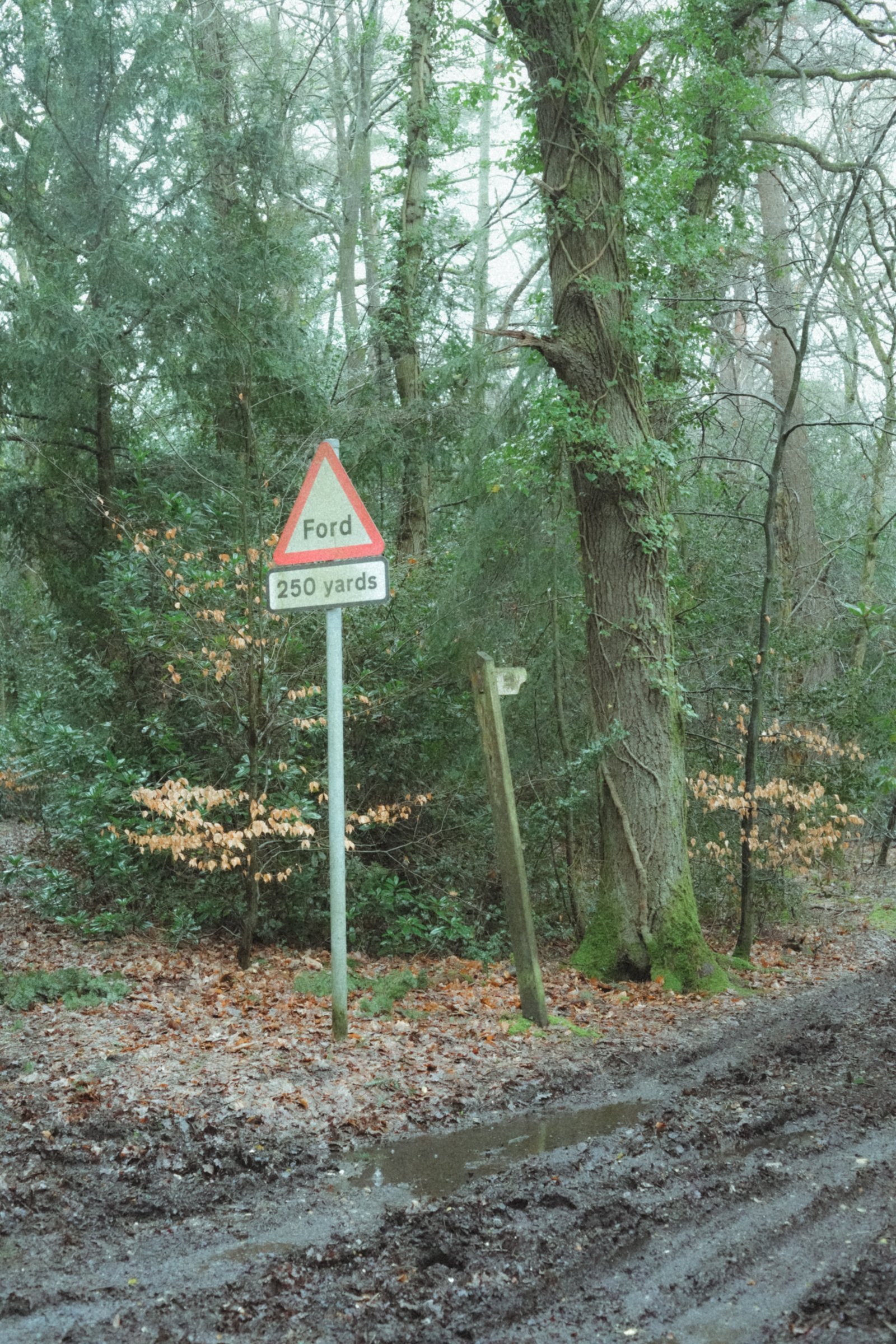
The end of Ox Drove on the Adbury to Burghclere lane.
Mossy branches.
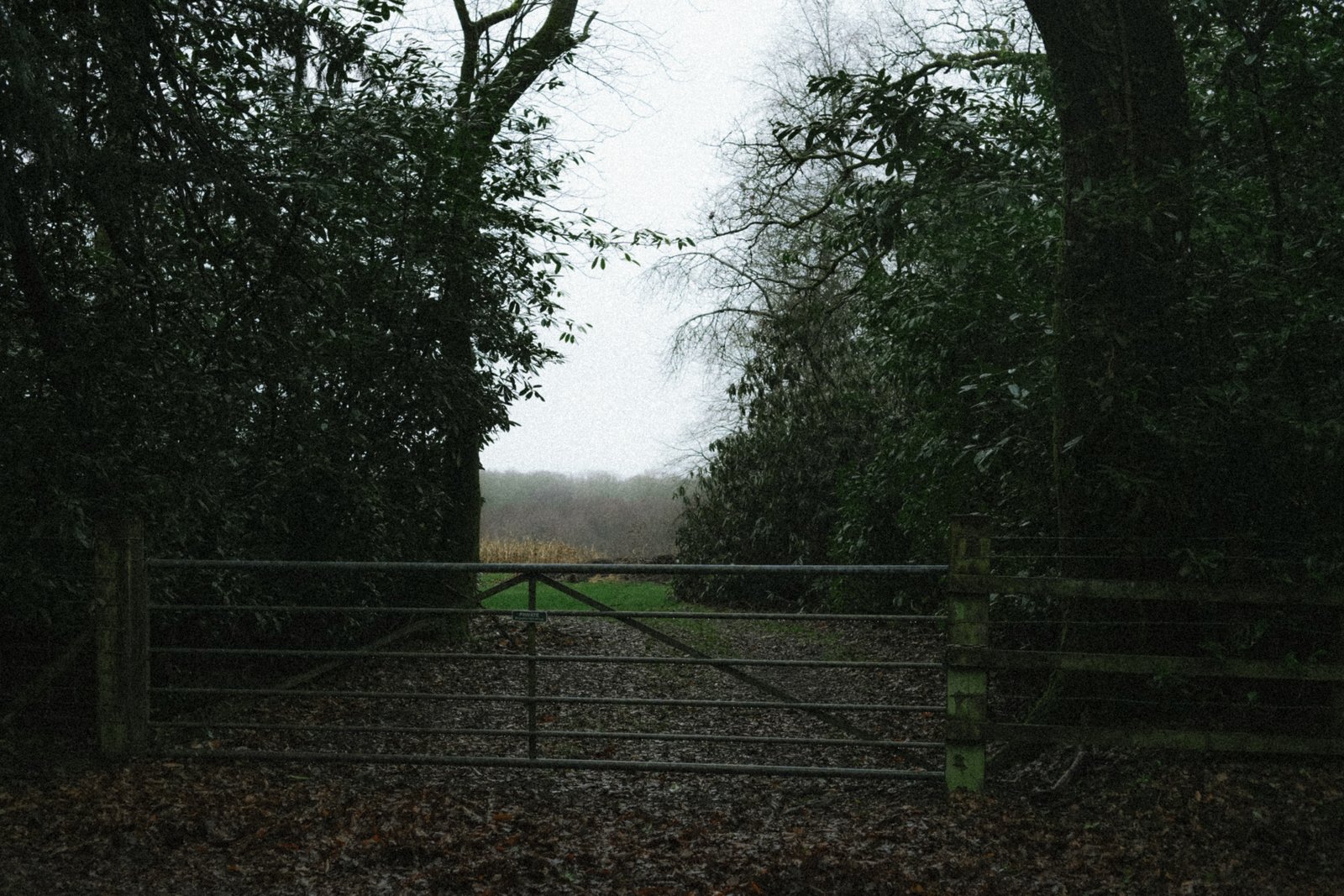
This gap is a short distance north of the end of Ox Drove. Through it you can see the treetops of High Wood.
At the end of Ox Drove I scrape off the mud that has smothered the undersides of both shoes. I’ve come to locate the two gateways on the eastern side of the quiet Adbury to Burghclere road. Both are of interest to me.
The closest to me is about 30m north of Ox Drove and is the only place where a passer-by can see the tree-tops of High Wood, the copse where the Sandleford rabbits dug scratchings prior to meeting Cowslip for the first time. I stop to finally get a photograph. For a while I had suspected this of being the site of the previously mentioned gravel path, but after sitting with old online maps concluded that the path I sought was actually about 170m back down the road, south of Ox Drove.
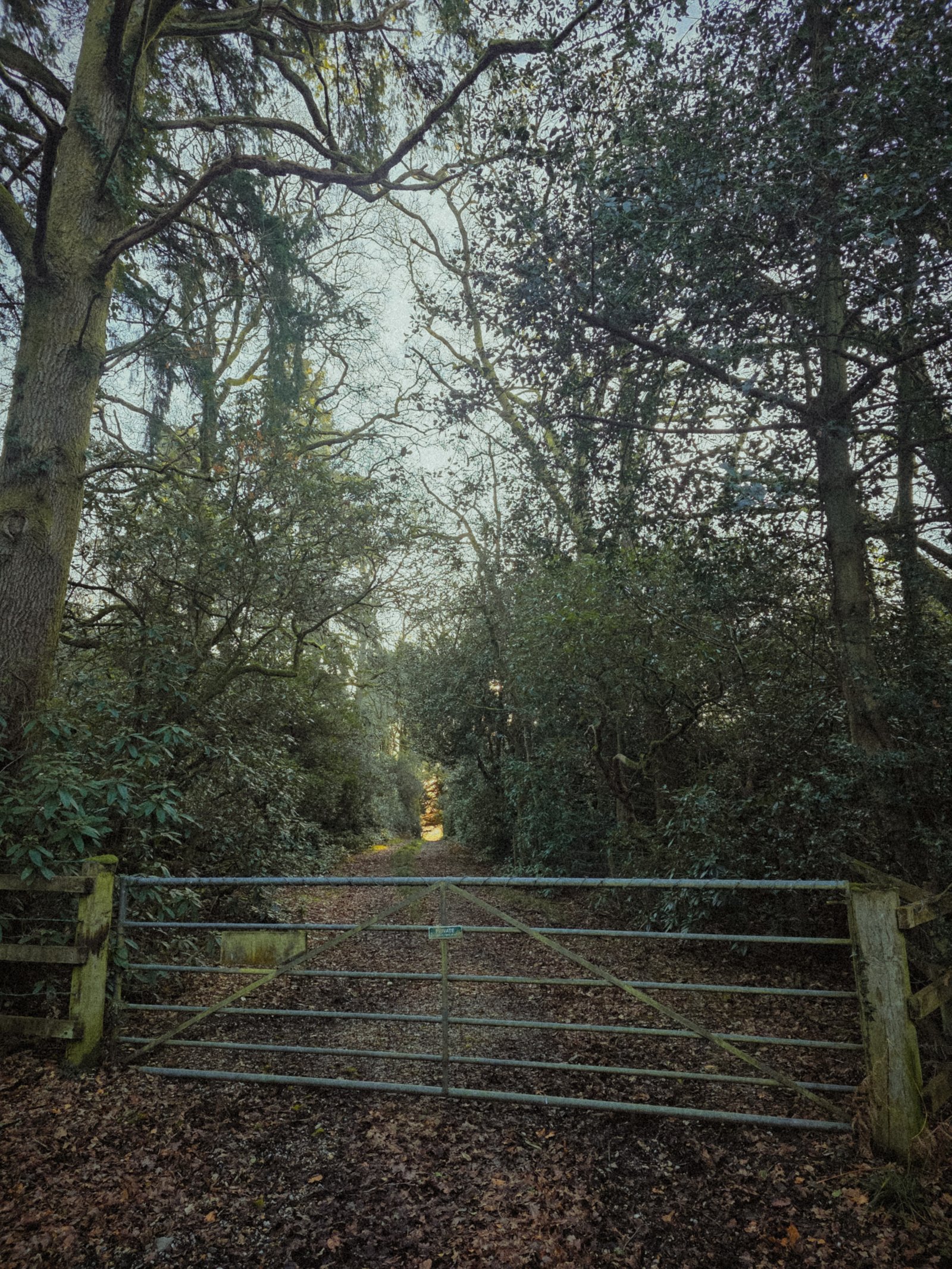
This, I believe, is the gravel track Richard Adams mentions as the rabbits’ route to the open fields near Cowslip’s Warren.
This second gateway shows on a 1968 land utilisation sheet by Ordnance Survey as the end of a short track immediately to the north of Gravel Copse, dividing up a belt of woodland. It fits with the description offered by Adams of taking the rabbits out into a field between two copses.
It’s fun to imagine the tired Sandleford rabbits making their way along the path, away from where I’m stood with my camera, especially as it was here where Hazel shared one of my favourite lines from the story: ‘Come on, then, Acorn,’ he said. ‘You want to run—I’ll run with you.’
If only they’d known what they were running into.
It is frustrating not to be able to pass on through the gate and find myself sharing the view the rabbits would have had as they followed the path downhill. Yet we can’t win them all. I’m just grateful that I am still able to visit most of the sites in Richard Adams’ wonderful novel.