Ladle Hill: March 2026
Pass to the north on the narrow road from Old Burghclere to Kingsclere and Ladle Hill is beautifully imposing. It is topped by an ancient, albeit incomplete hillfort, one of a pair of forts (the other on Beacon Hill) that face each other over the dual-carriageway. Ladle Hill possesses none of the equestrian trappings of Watership and Cannon Heath Downs. Without gallops and fences to restrict access, it feels more open and accessible.
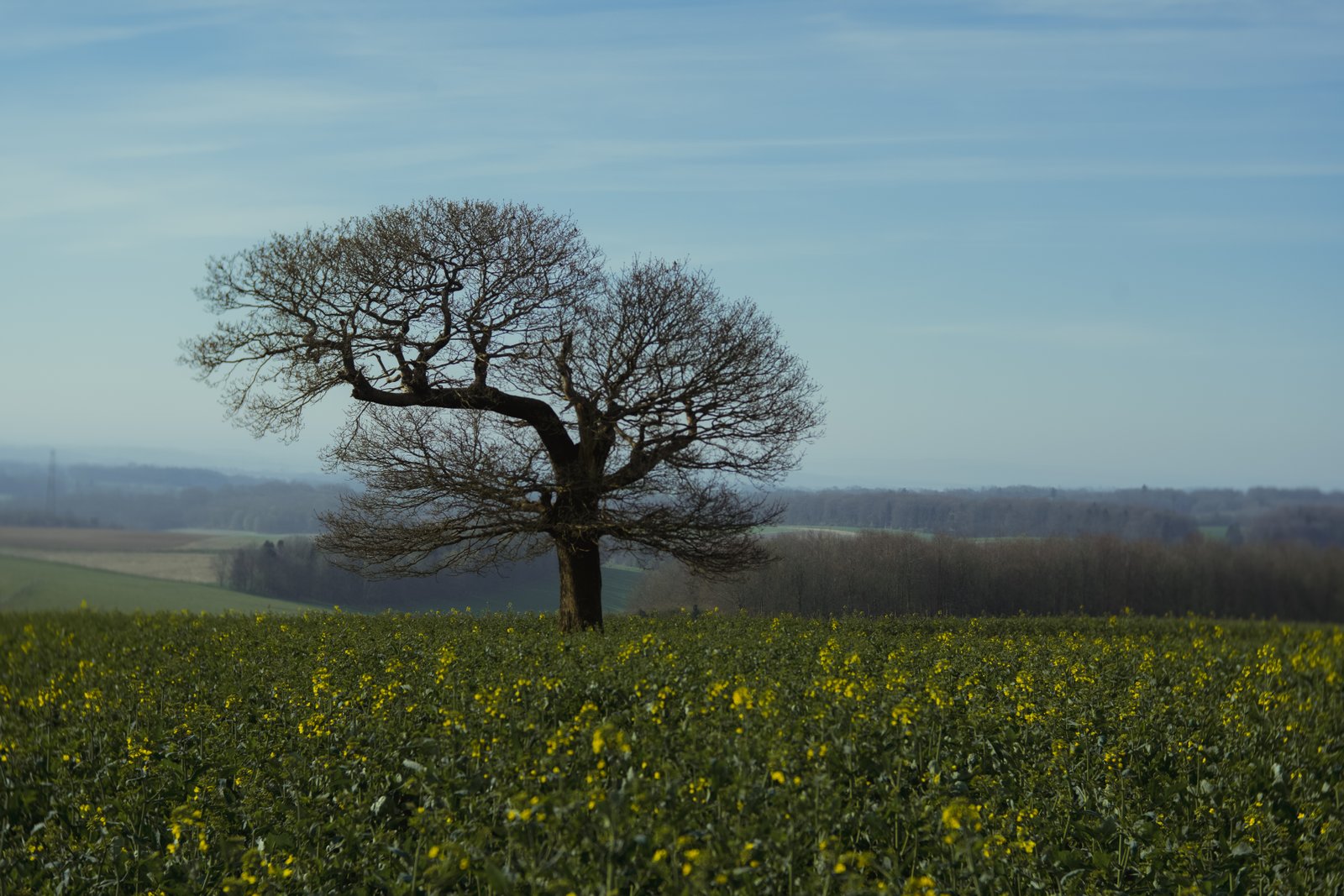
This tree is beautifully photogenic; one of my favourites across the Watership Down landscape.
Ladle Hill is just a fringe location in Watership Down, mentioned in Chapter Fifty, And Last, simply as the hill behind which the sun goes down. From the upper western edge of the Down, close to the triangulation pillar, you can look over to Ladle Hill and relive that moment. (It is something that I will, eventually get on camera when the weather is forgiving. I promise.)
In many ways Ladle Hill is a more noteworthy feature on the ridge of the North Wessex Downs than its more famous cousin. During the late autumn and winter months it can be seen to your left through the bare roadside trees as you head south down the A34. It is the open hilltop that curves around onto Great Litchfield Down which, in turn, runs parallel to you.
Pass to the north on the narrow road from Old Burghclere to Kingsclere and Ladle Hill is beautifully imposing. It is topped by an ancient, albeit incomplete hillfort, one of a pair of forts (the other on Beacon Hill) that face each other over the dual-carriageway. Ladle Hill possesses none of the equestrian trappings of Watership and Cannon Heath Downs. Without gallops and fences to restrict access, it feels more open and accessible. It’s also a much more relaxed walk; there aren’t the dogs only too happy to knock small children into puddles that you tend to come across on Cannon Heath Down.
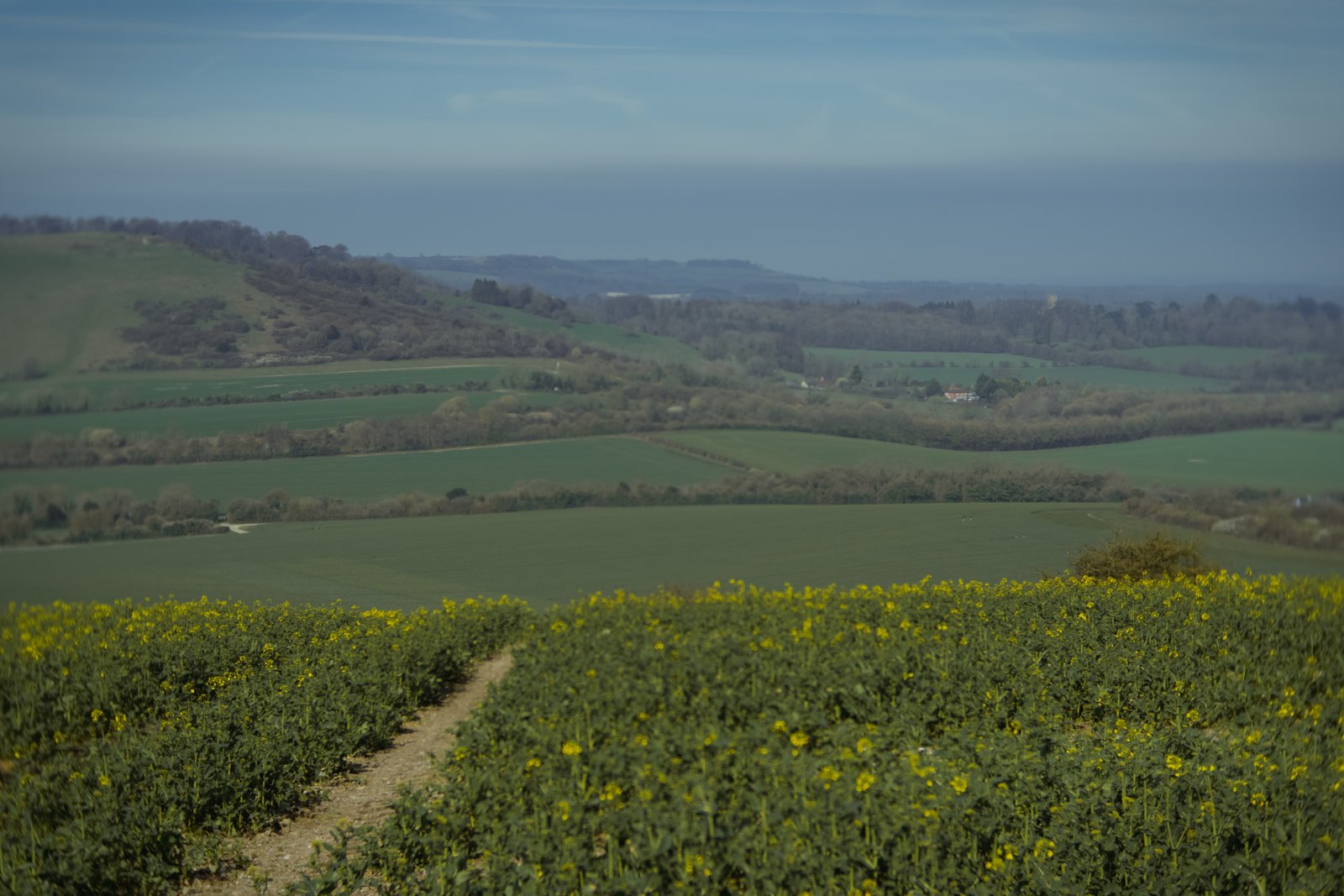
On a glorious, calm Sunday morning in late March 2026 I decided to take only my second walk over to Ladle Hill. I was keen to explore the hillfort which sits behind a wire fence and gate along the Wayfarer’s Walk. On my previous visit I hadn’t realised this enclosure was all open access land, meaning everyone has the right to explore. If looking at ridges on a hilltop aren’t your thing then such forts aren’t for you, but I ventured to where the escarpment begins to drop away. The views here are wonderful, looking down onto Sydmonton and Old Burghclere. Through the trees, you can make out Sydmonton Court, home of composer Andrew Lloyd Webber.
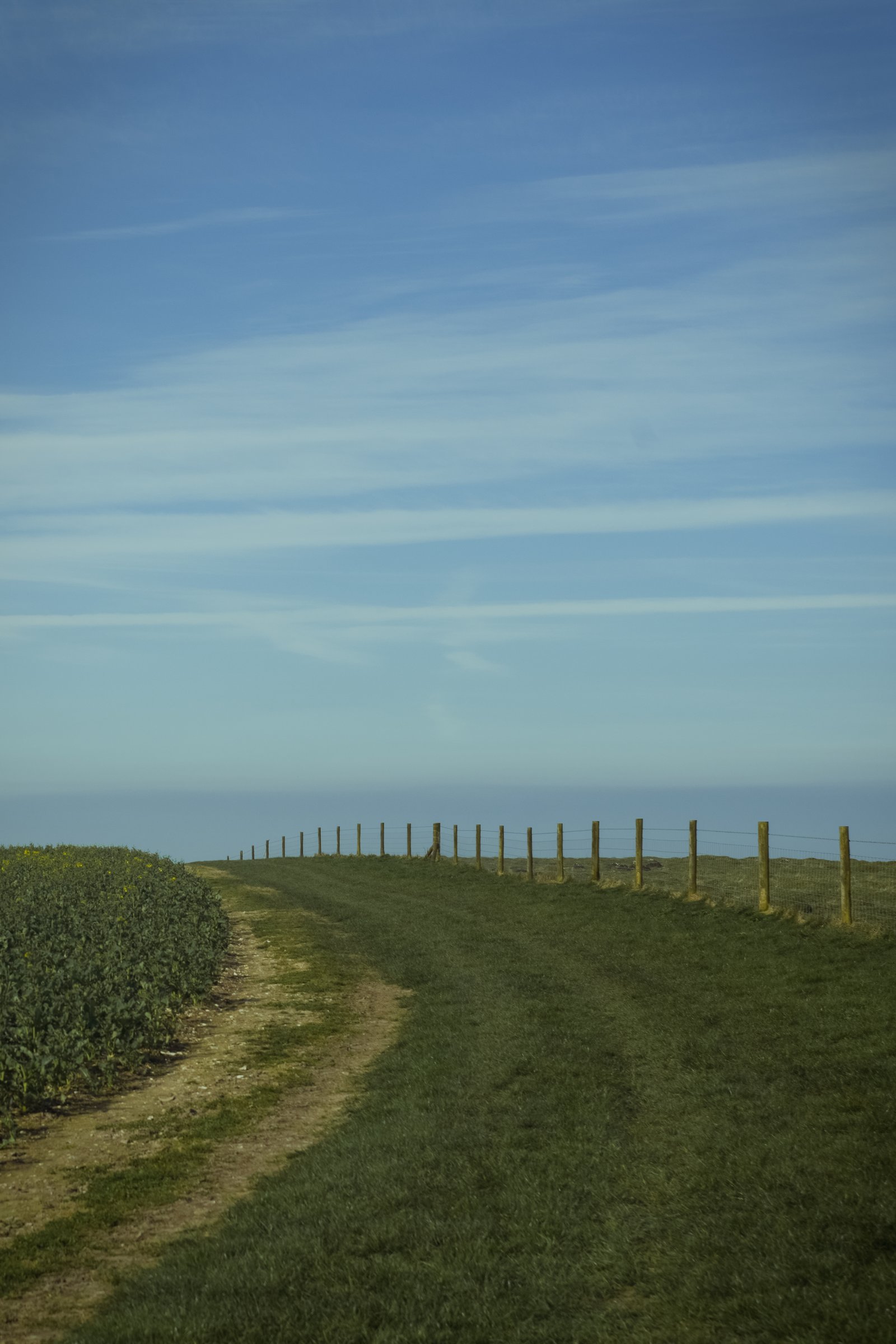
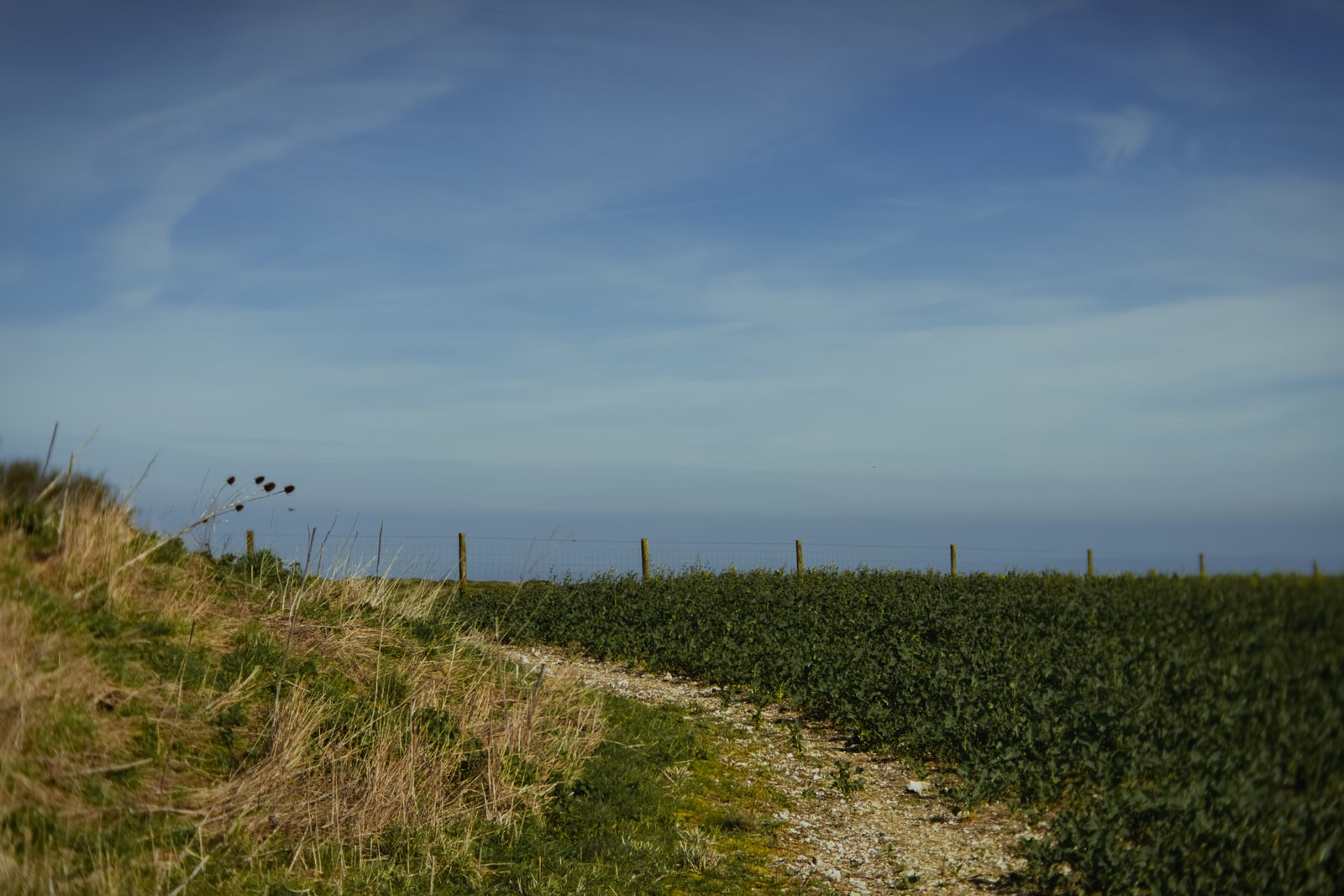
Acres of sky.
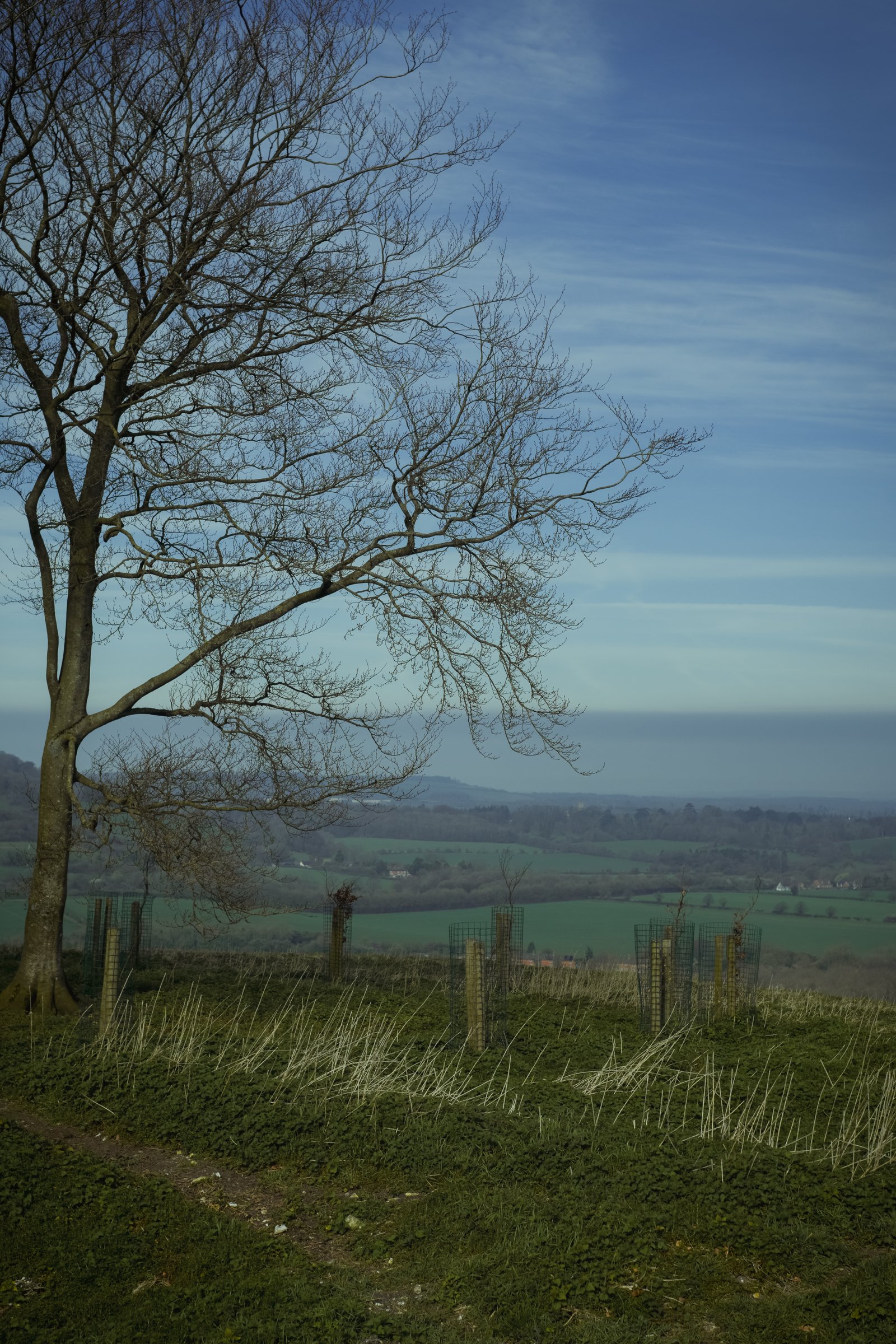
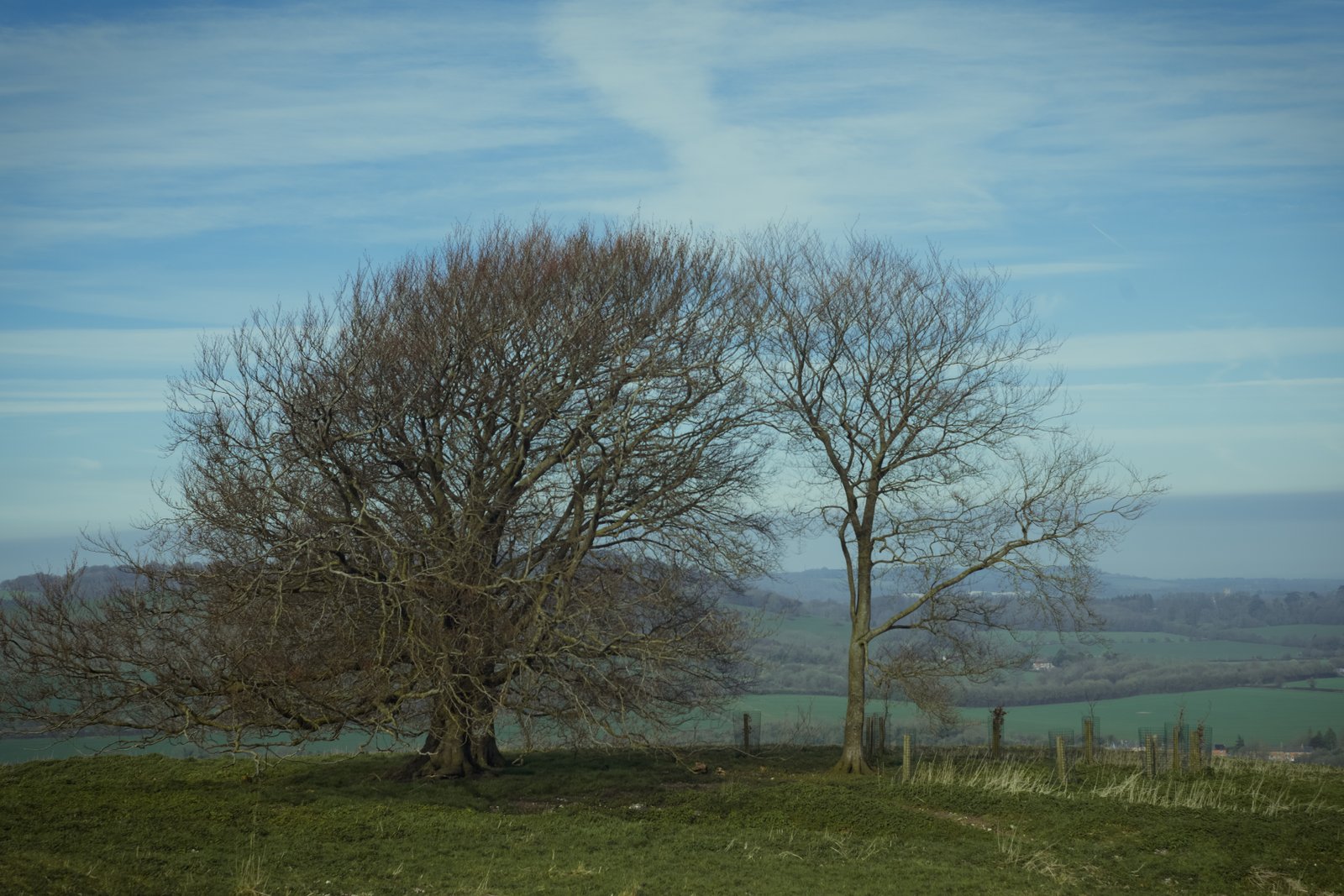
Who said this place is a one tree hill?
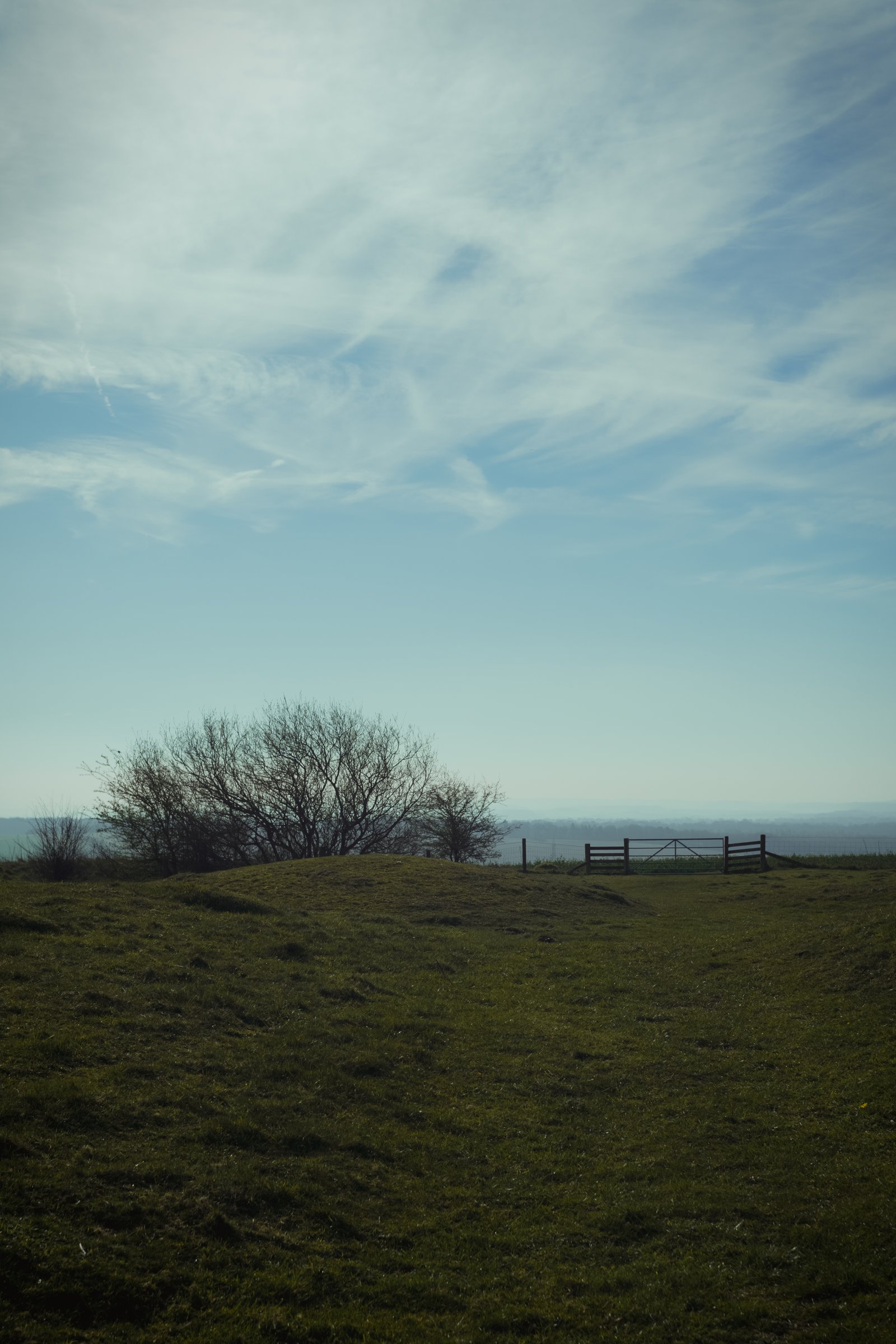
Inside the hillfort.
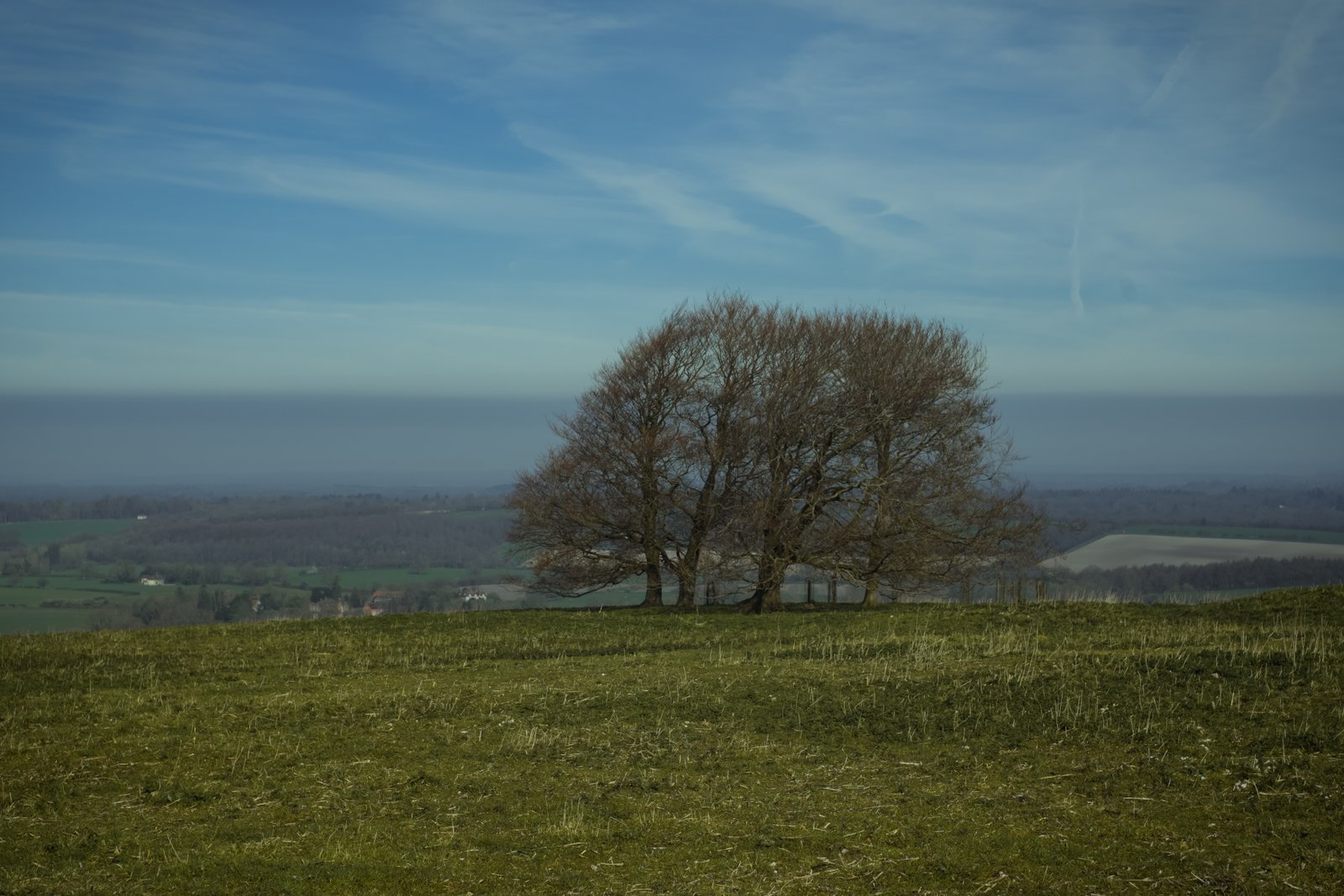
Over Old Burghclere.
Just a few metres west of where the hillfort’s enclosure ends, the Wayfarer’s Walk begins to curve to the left and gently downhill onto Great Litchfield Down. This is my favourite spot on the hill. Today, the field encompassing the footpath is full of green oil seed rape plants, a sprinkling of which are beginning to flower.
To the east, is the A34 and Beacon Hill. Just to the right, looking over the trees, is the tower of Highclere Castle. This was the home of Lord Carnarvon, Egyptologist and sponsor of Howard Carter’s expedition to unearth the tomb of Tutankhamun, the boy pharaoh. In more recent culture, Highclere Castle became famous as the primary setting for popular British television series Downton Abbey. No, I never watched it.
When time allows I will make that walk down over Great Litchfield Down and pass under the A34. Hopefully it will be sometime in the not too distant future.
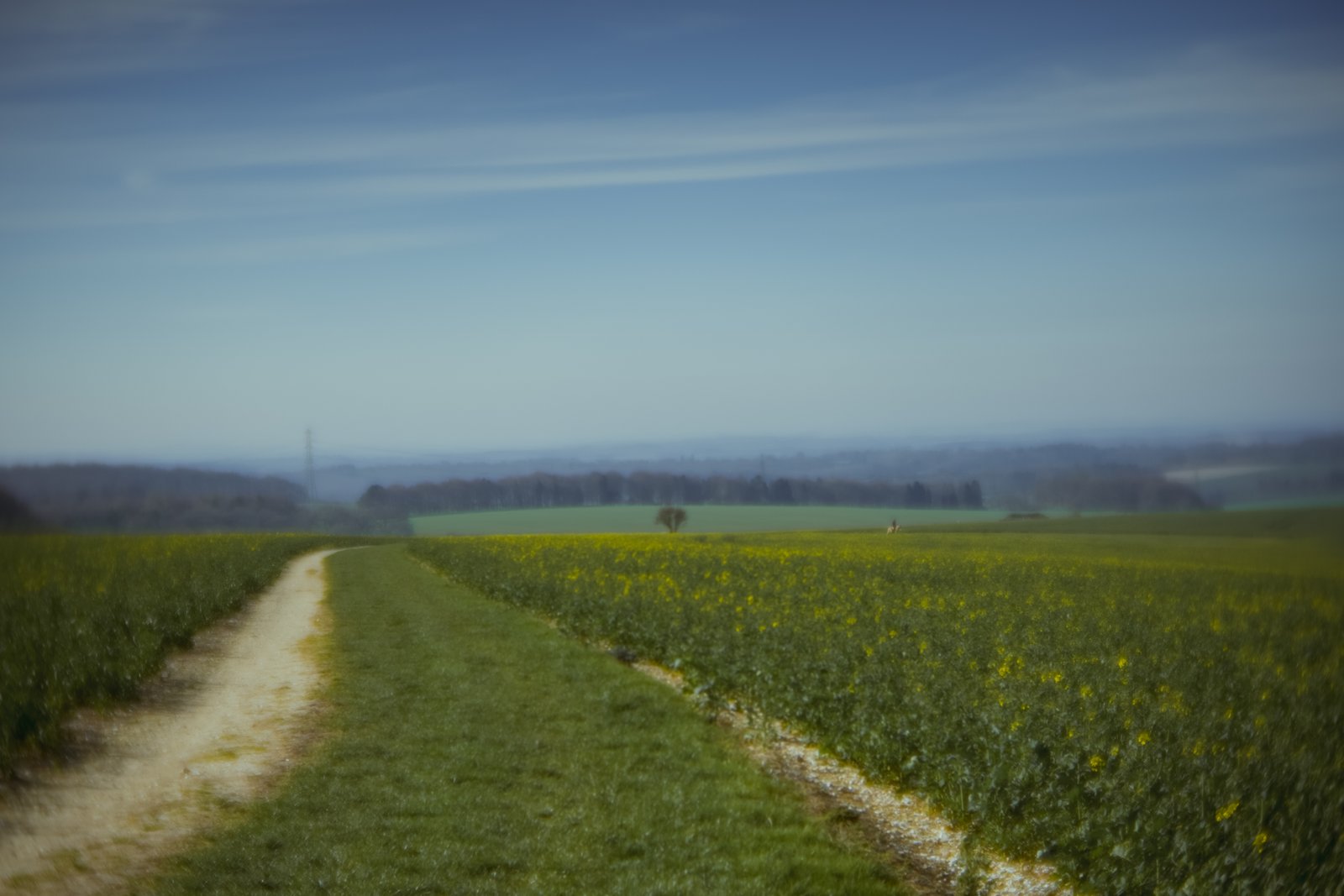
The Wayfarer’s Walk rolls on onto Great Litchfield Down and, later to the A34 and Seven Barrows.